Everett Historic District

Why it's listed
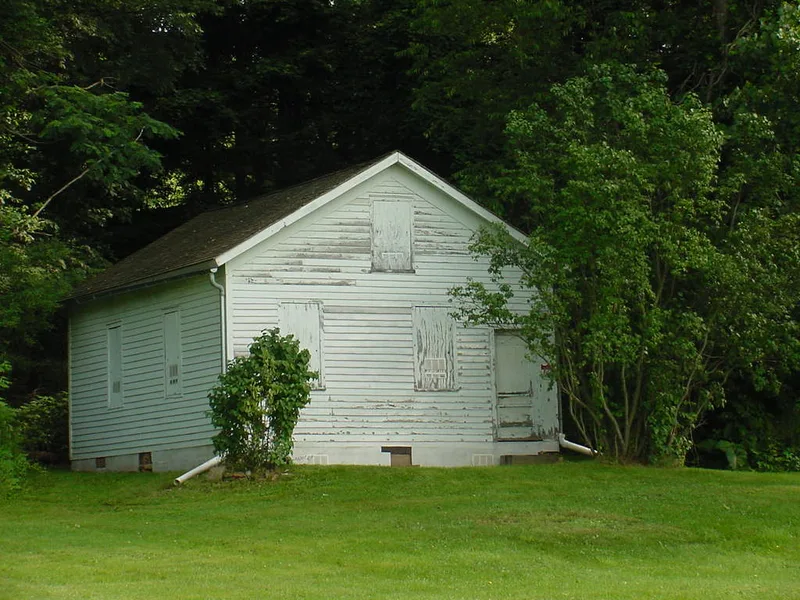
Everett is a small crossroads hamlet in the Cuyahoga Valley, about nine miles north of Akron, where Everett Road meets Riverview Road. The district covers 17 acres and includes modest one-and-a-half to three-story balloon-frame houses, privies, garages, a gas station and confectionery built around 1930, a general store, and the ruins of wells and a former store. Archeological sites add evidence of early domestic life. The settlement grew up beside the Ohio and Erie Canal and the Valley Railway, and its 1888 population was 200. Farming was the leading occupation, and the community had a school, church, post office, Grange and blacksmith. During the 1920s the automobile and improved roads began to change its agrarian character. The district was listed for its role in settlement and community development, its late nineteenth and early twentieth century architecture, and its archeological potential. Nearby Wait and Hunt farms are excluded because they were nominated separately.
Machine-generated summary. This summary was generated by a language model from the official nomination document and has not been reviewed line by line by an editor. It may contain errors. Check the source document before relying on any detail. Source: nomination document (PDF) · catalog entry. Generated October 2026 (model claude-sonnet-5-5, prompt v1.0-2026-10-29).
| Period of significance | c.1830-1935 |
|---|---|
| Styles | Late Victorian; Queen Anne; no style |
| Areas of significance | Community Planning and Development, Historic - Non-Aboriginal |
| Acreage | 17 |
| Boundary source | NPS cultural-resource GIS polygon |
| Full listing page | Everett Historic District (property record) |
What listing means for this property
This is a historic district. Buildings within its boundary are either contributing (they add to the district's significance) or non-contributing. Owners of contributing income-producing buildings can claim the 20% federal rehabilitation tax credit; homeowners should look at state credits. National Register districts impose no design review by themselves; a local historic district ordinance, if one exists, does (the difference explained).
General information, not legal or tax advice. Rules change; confirm with your State Historic Preservation Office or a qualified adviser.