Euclid Avenue Historic District (Boundary Increase)

The National Park Service has not published a boundary polygon for this district; the map shows the listed properties inside it and the district's reference point.
Why it's listed
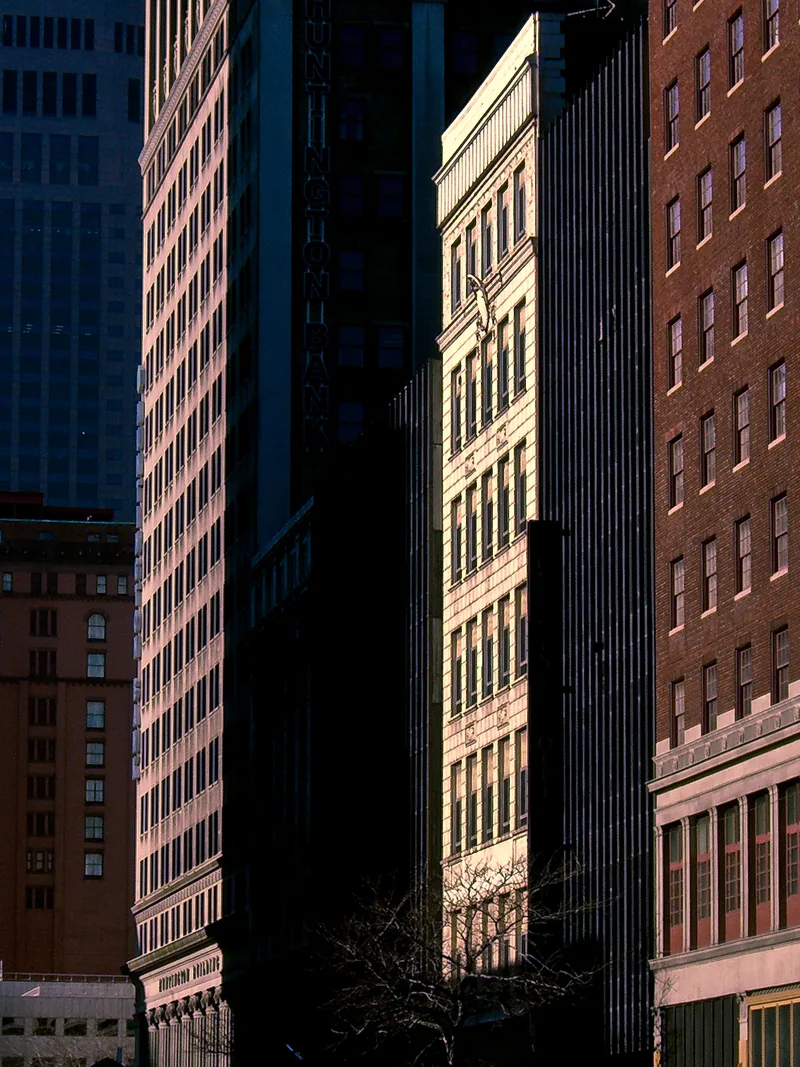
Three early twentieth-century buildings at the edge of downtown Cleveland were added to the Euclid Avenue Historic District because they reflect the avenue's 1920s commercial boom. The Standard Building, finished in 1924 for the Brotherhood of Locomotive Engineers' banking ventures, rises twenty stories in cream-colored glazed terra cotta with a starburst motif by architects Knox and Elliot. The St. Clair Building, built about 1925 as a parcel post station, is a five-story brown brick Commercial style structure later used by the Cleveland Electric Illuminating Company and now by city offices. The sixteen-story Allerton Hotel of 1926, designed by Murgatroyd and Ogden of New York in Moorish Revival style, offered long-term rooms, a pool and courts, was used by the Navy in 1944, and became senior apartments in 1973-74. Together they illustrate the commercial, office and residential growth of the Euclid Avenue area between 1870 and 1958.
Machine-generated summary. This summary was generated by a language model from the official nomination document and has not been reviewed line by line by an editor. It may contain errors. Check the source document before relying on any detail. Source: nomination document (PDF) · catalog entry. Generated October 2026 (model claude-sonnet-5-5, prompt v1.0-2026-10-29).
| Period of significance | 1870-1958 |
|---|---|
| Styles | Late 19th and Early 20th Century Revivals; Late 19th and Early 20th Century American Movements (Moorish Revival, Commercial style with Art Deco hints) |
| Areas of significance | Commerce, Architecture |
| Acreage | 4 |
| Boundary source | not published |
| Full listing page | Euclid Avenue Historic District (Boundary Increase) (property record) |
What listing means for this property
This is a historic district. Buildings within its boundary are either contributing (they add to the district's significance) or non-contributing. Owners of contributing income-producing buildings can claim the 20% federal rehabilitation tax credit; homeowners should look at state credits. National Register districts impose no design review by themselves; a local historic district ordinance, if one exists, does (the difference explained).
General information, not legal or tax advice. Rules change; confirm with your State Historic Preservation Office or a qualified adviser.