Eastwood Historic District

Why it's listed
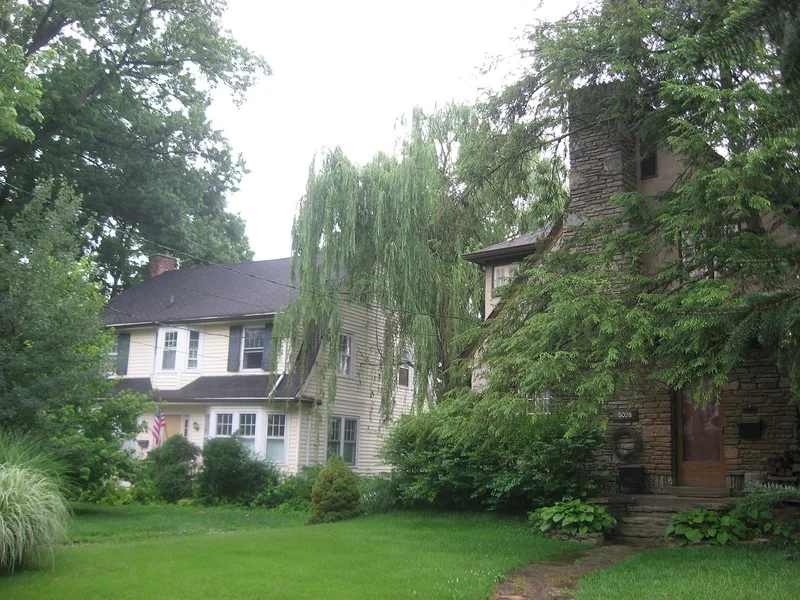
Eastwood is a planned residential neighborhood in Cincinnati, roughly 10 miles from downtown and between the Oakley and Madisonville areas. Platted in 1922, it centers on East and West Eastwood Circle, with Overbrook and Collinwood extending to the west. The district holds 86 contributing and 3 noncontributing buildings, mainly modest houses and garages built before 1954 in Tudor Revival, Colonial Revival, Bungalow and Ranch forms. Deed restrictions in 1924 required 40-foot setbacks and a minimum house value of $7,000. Ten houses were ordered as Sears, Roebuck & Company kits, beginning with a Dutch Colonial Revival Verona model in 1923; nine of them contribute. Local architect Wilbur M. Firth and his brother Lee designed at least three houses, and similar details suggest more. Builders included Charles E. Dawson and George J. Dell. Street trees were planted together, giving the streets a unified, village-like feel. The area was listed for its cohesive planning and architecture.
Machine-generated summary. This summary was generated by a language model from the official nomination document and has not been reviewed line by line by an editor. It may contain errors. Check the source document before relying on any detail. Source: nomination document (PDF) · catalog entry. Generated October 2026 (model claude-sonnet-5-5, prompt v1.0-2026-10-29).
| Styles | Late 19th & 20th Century Revivals (Colonial Revival, Tudor Revival, Mission/Spanish Colonial Revival); Bungalow/Craftsman; Modern Movement: California/Ranch |
|---|---|
| Areas of significance | Architecture |
| Acreage | 15.2 |
| Boundary source | NPS cultural-resource GIS polygon |
| Full listing page | Eastwood Historic District (property record) |
What listing means for this property
This is a historic district. Buildings within its boundary are either contributing (they add to the district's significance) or non-contributing. Owners of contributing income-producing buildings can claim the 20% federal rehabilitation tax credit; homeowners should look at state credits. National Register districts impose no design review by themselves; a local historic district ordinance, if one exists, does (the difference explained).
General information, not legal or tax advice. Rules change; confirm with your State Historic Preservation Office or a qualified adviser.