East Liverpool Downtown Historic District

Why it's listed
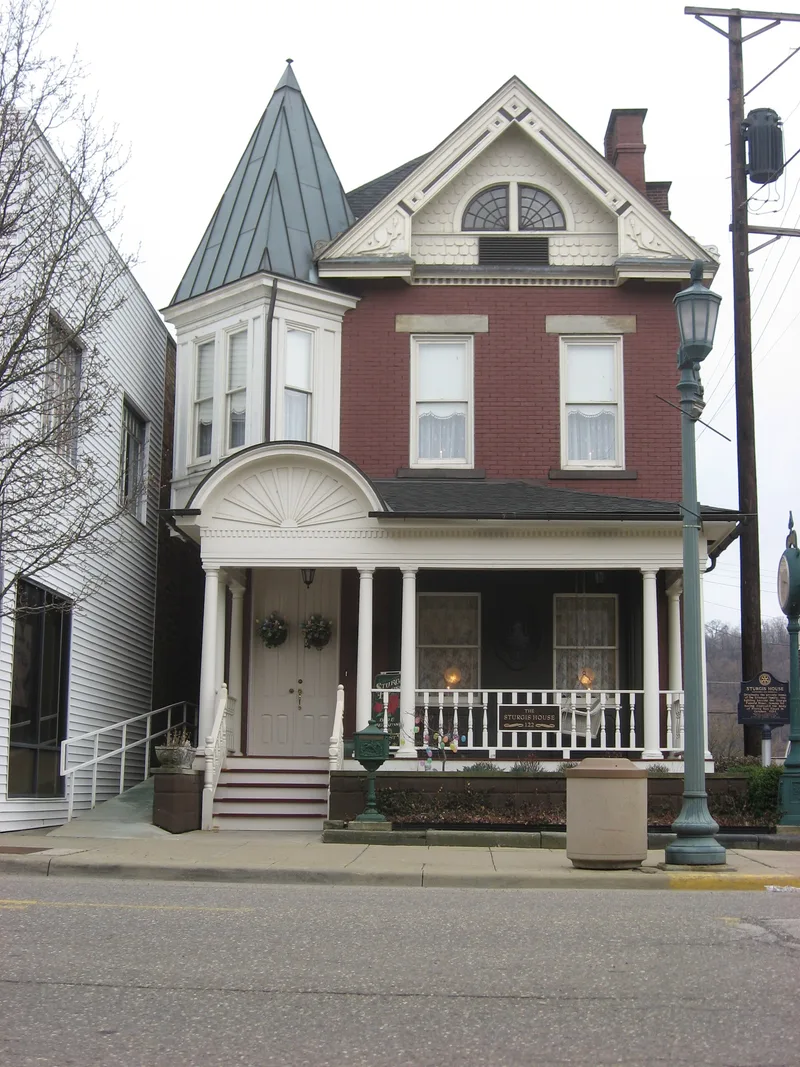
East Liverpool's downtown historic district covers 22 acres of the city's traditional commercial core on the Ohio River. It joins two earlier districts, the Diamond and East Fifth Street, into one larger district after demolitions and a re-evaluation of buildings that had reached fifty years of age. Of 100 resources counted, 86 contribute to its character and 14 do not; another 14 buildings were already individually listed. Market Street, the main commercial thoroughfare, runs through a street grid, and the triangular Diamond marks the point where it splits into St. Clair and Dresden Avenues. Buildings range from modest two-story commercial blocks to the six-story Crook Building, mostly of brick, with some terra cotta and cast iron storefronts. Styles run from Italianate and Queen Anne to Neo-Classical, Colonial Revival, Art Deco and Art Moderne. Most buildings date from 1890 to 1930. The district was recognized for its architecture and its commercial importance from about 1850 to 1949.
Machine-generated summary. This summary was generated by a language model from the official nomination document and has not been reviewed line by line by an editor. It may contain errors. Check the source document before relying on any detail. Source: nomination document (PDF) · catalog entry. Generated October 2026 (model claude-sonnet-5-5, prompt v1.0-2026-10-29).
| Period of significance | c. 1850-1949 |
|---|---|
| Styles | Late Victorian (Italianate, Second Empire); Late 19th and 20th Century Revivals (Colonial Revival, Neo-Classical Revival, Late Gothic Revival); Modern Movement (Art Deco, Art Moderne); no style |
| Areas of significance | Architecture, Commerce |
| Acreage | 22 |
| Boundary source | NPS cultural-resource GIS polygon |
| Full listing page | East Liverpool Downtown Historic District (property record) |
What listing means for this property
This is a historic district. Buildings within its boundary are either contributing (they add to the district's significance) or non-contributing. Owners of contributing income-producing buildings can claim the 20% federal rehabilitation tax credit; homeowners should look at state credits. National Register districts impose no design review by themselves; a local historic district ordinance, if one exists, does (the difference explained).
General information, not legal or tax advice. Rules change; confirm with your State Historic Preservation Office or a qualified adviser.