Crittenden Farm

Why it's listed
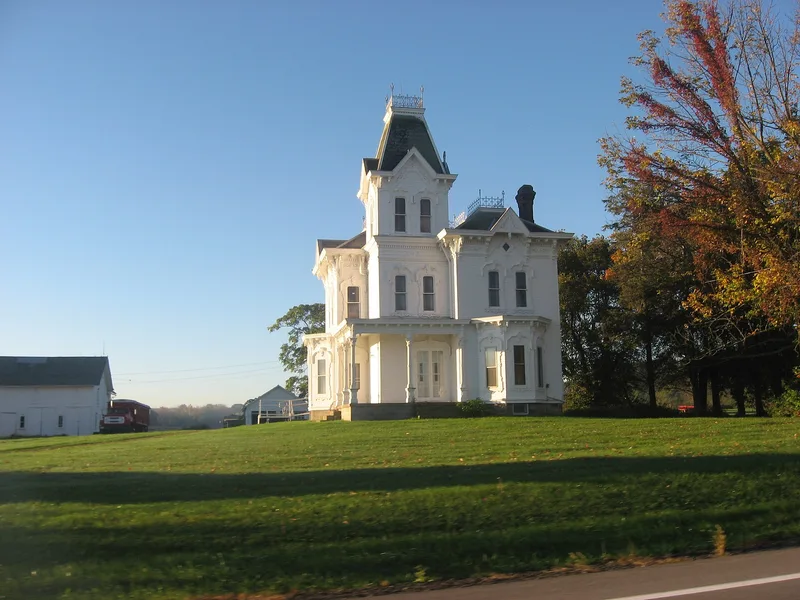
Crittenden Farm is a 665-acre working farm in western Ruggles Township, Ashland County, Ohio, bounded by U.S. Routes 224 and 250. Its gently rolling land includes pasture, cultivated fields, a twelve-acre lake behind an earthen dam, and a western woodland of beech, tulip and hickory that appears never to have been logged. Two large wooden farmhouses stand on the property. The Charles Crittenden House, dated 1878, is a Second Empire residence with a mansard tower, carved porches and an ornate cornice. The Henry Crittenden House is an Italianate home of nearly identical plan. Brothers Charles and Henry Crittenden built them after dividing their father Medad's farm in the 1870s. The land was first bought from the government land office by Nezer Sutherland, and a small stone-enclosed family cemetery holds early owners. The farm is notable for its size, its surviving virgin forest, its architecture and its unbroken form over roughly a century and a half.
Machine-generated summary. This summary was generated by a language model from the official nomination document and has not been reviewed line by line by an editor. It may contain errors. Check the source document before relying on any detail. Source: nomination document (PDF) · catalog entry. Generated October 2026 (model claude-sonnet-5-5, prompt v1.0-2026-10-29).
| Period of significance | 1800-1899 |
|---|---|
| Styles | Second Empire (Charles Crittenden House); Italianate (Henry Crittenden House) |
| Areas of significance | Architecture, Agriculture |
| Acreage | 665 |
| Boundary source | NPS cultural-resource GIS polygon |
| Full listing page | Crittenden Farm (property record) |
What listing means for this property
This is a historic district. Buildings within its boundary are either contributing (they add to the district's significance) or non-contributing. Owners of contributing income-producing buildings can claim the 20% federal rehabilitation tax credit; homeowners should look at state credits. National Register districts impose no design review by themselves; a local historic district ordinance, if one exists, does (the difference explained).
General information, not legal or tax advice. Rules change; confirm with your State Historic Preservation Office or a qualified adviser.