Concord Hicksite Friends Meeting House

The National Park Service has not published a boundary polygon for this district; the map shows the listed properties inside it and the district's reference point.
Why it's listed
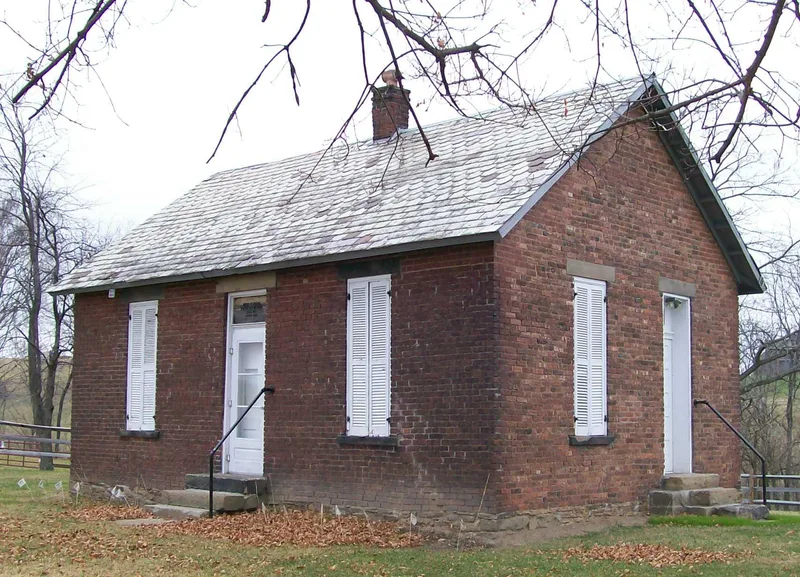
Set beside a former road intersection about six miles northwest of Wheeling, this one-story brick meeting house served Quakers of the Concord community in Belmont County, Ohio. It was built in 1815 as a six-bay structure with separate men's and women's rooms, then reduced in 1898 to a smaller three-bay Cottage Plan that was easier to heat and let families sit together. Original benches of butternut wood, a raised gallery and a clerk's table remain inside, and a burial ground occupies the southern half of the one-acre property. Concord Friends were active in the 1828 division of the Society of Friends, and after 1831 only the Hicksite branch worshipped here until meetings ended in 1919. The property is recognized as one of nine surviving Hicksite meeting houses in Ohio and for its architecture. Josiah Fox, a naval ship designer, is buried in the grounds. Today descendants of early settlers maintain the site, which is open to visitors.
Machine-generated summary. This summary was generated by a language model from the official nomination document and has not been reviewed line by line by an editor. It may contain errors. Check the source document before relying on any detail. Source: nomination document (PDF) · catalog entry. Generated October 2026 (model claude-sonnet-5-5, prompt v1.0-2026-10-29).
| Period of significance | 1815-1919 |
|---|---|
| Styles | No Style (Quaker 'Cottage Plan' meeting house) |
| Areas of significance | Religion, Architecture |
| Acreage | 1 |
| Boundary source | not published |
| Full listing page | Concord Hicksite Friends Meeting House (property record) |
What listing means for this property
This is a historic district. Buildings within its boundary are either contributing (they add to the district's significance) or non-contributing. Owners of contributing income-producing buildings can claim the 20% federal rehabilitation tax credit; homeowners should look at state credits. National Register districts impose no design review by themselves; a local historic district ordinance, if one exists, does (the difference explained).
General information, not legal or tax advice. Rules change; confirm with your State Historic Preservation Office or a qualified adviser.