Cincinnati Street Gas Lamps

The National Park Service has not published a boundary polygon for this district; the map shows the listed properties inside it and the district's reference point.
Why it's listed
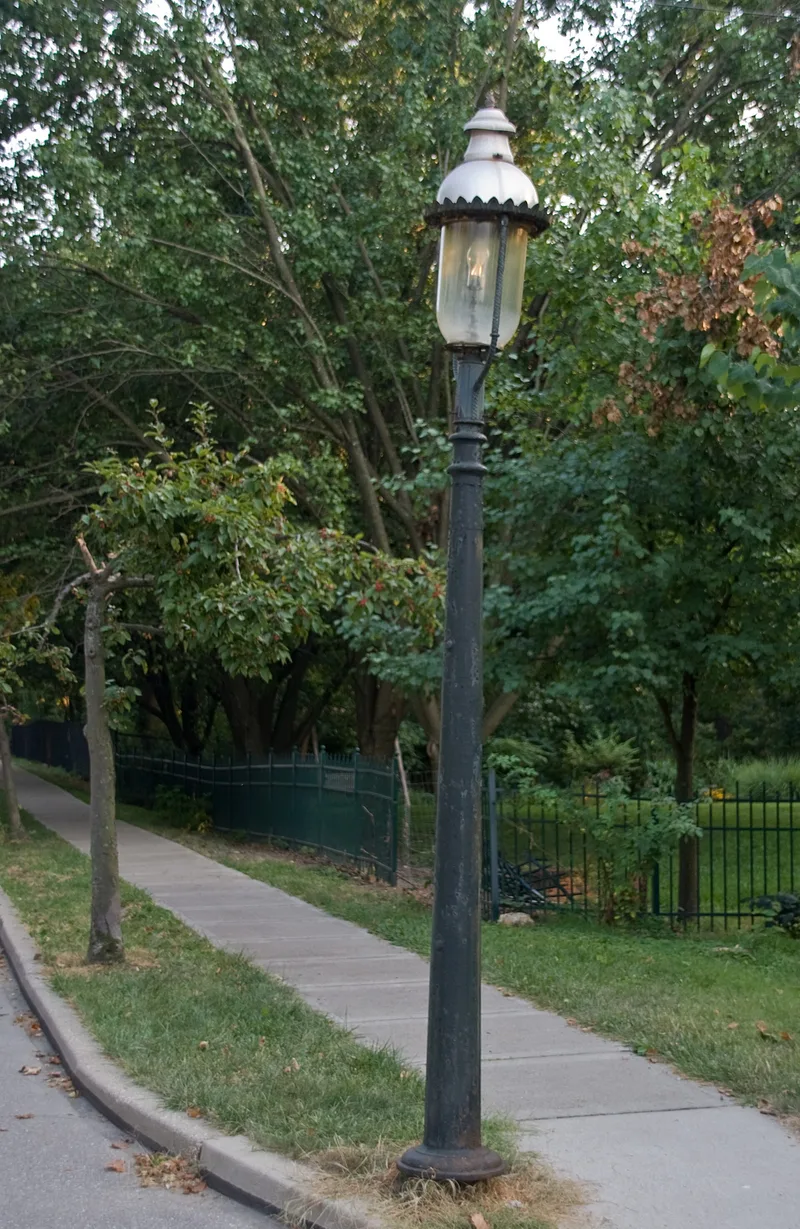
About 1,172 cast iron gas street lamps remain in use in Cincinnati's neighborhoods and in parts of Columbia and Sycamore Townships. Each post stands roughly eight feet tall, weighs 200 to 450 pounds, and carries a Boulevard-style fixture. Most posts are believed to have been made around 1895 by a range of foundries, producing patterns such as full ivy, half ivy, fluted tapered, and composite designs. Gas street lighting began in Cincinnati when City Council bought one hundred cast iron lamp posts in 1843, and the number of lamps peaked at 9,512 in 1892 before electric lighting reduced it. The Boulevard fixture, patterned in 1898, became standard in the city. Lamplighters gave way to timing devices from 1928, and since 1956 the lamps have burned around the clock. The district was recognized as an example of lighting technology and for the unusual number of lamps still operating, which give many streets a distinctive yellow glow beside older architecture.
Machine-generated summary. This summary was generated by a language model from the official nomination document and has not been reviewed line by line by an editor. It may contain errors. Check the source document before relying on any detail. Source: nomination document (PDF) · catalog entry. Generated October 2026 (model claude-sonnet-5-5, prompt v1.0-2026-10-29).
| Areas of significance | Landscape Architecture, Engineering |
|---|---|
| Boundary source | not published |
| Full listing page | Cincinnati Street Gas Lamps (property record) |
What listing means for this property
This is a historic district. Buildings within its boundary are either contributing (they add to the district's significance) or non-contributing. Owners of contributing income-producing buildings can claim the 20% federal rehabilitation tax credit; homeowners should look at state credits. National Register districts impose no design review by themselves; a local historic district ordinance, if one exists, does (the difference explained).
General information, not legal or tax advice. Rules change; confirm with your State Historic Preservation Office or a qualified adviser.