Cincinnati East Manufacturing and Warehouse District

Why it's listed
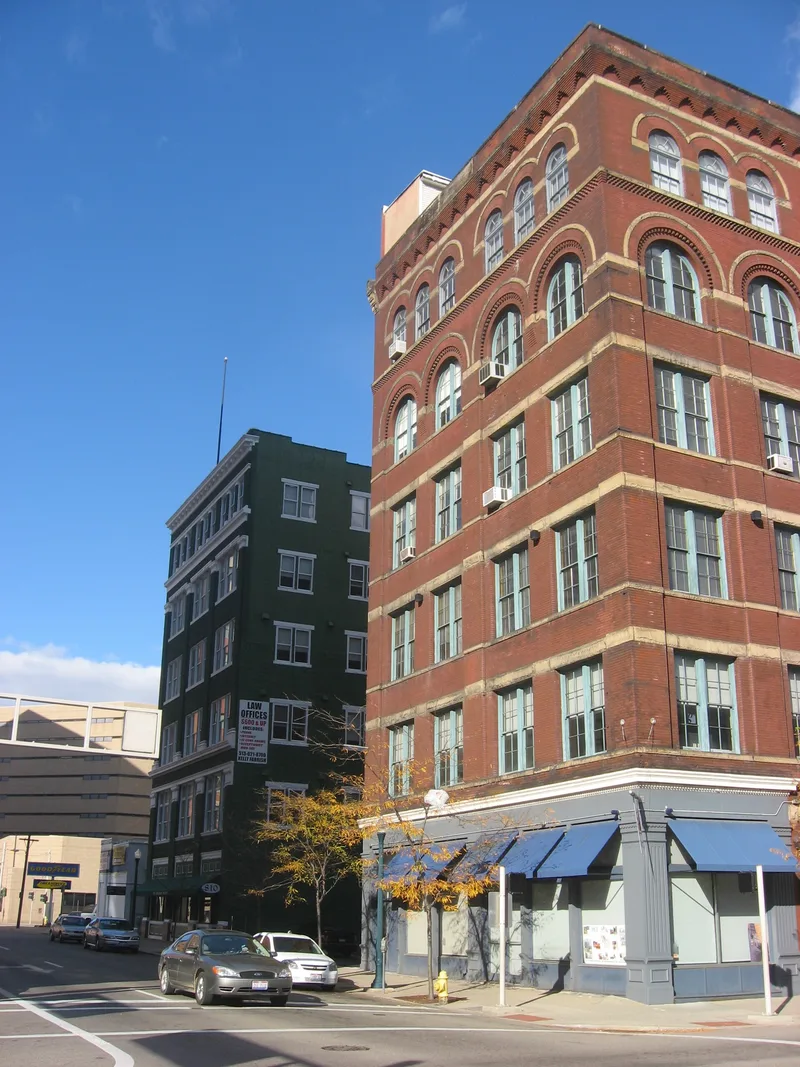
On the eastern fringe of downtown Cincinnati, this district of 25 buildings covers about ten blocks between E. Eighth and E. Court streets and Broadway and Main streets. Most buildings are five- to seven-story brick loft structures, with some low automotive buildings from the early twentieth century. Landmarks include the 10-story Power Building of 1903, noted for its self-supporting electrical system, the 12-story Post Times-Star Building of 1933, and a 1905 flatiron building. The area grew up around the Miami-Erie Canal and the Little Miami Railroad depot. By the 1850s it was densely filled with pork packers, lumber concerns and other industries. Later shoe manufacturers and automotive businesses followed. The district contains Italianate buildings from about 1860 to 1885, Chicago/Commercial loft buildings from 1904 to 1921, and a rare late 1920s filling station. It was listed for its association with the city's industrial development and for its architecture, which retains a high degree of integrity despite surface parking lots.
Machine-generated summary. This summary was generated by a language model from the official nomination document and has not been reviewed line by line by an editor. It may contain errors. Check the source document before relying on any detail. Source: nomination document (PDF) · catalog entry. Generated October 2026 (model claude-sonnet-5-5, prompt v1.0-2026-10-29).
| Styles | Italianate; Chicago/Commercial Style; Romanesque; Mission/Spanish Colonial Revival; Art Deco |
|---|---|
| Areas of significance | Architecture, Industry |
| Acreage | 15 |
| Boundary source | NPS cultural-resource GIS polygon |
| Full listing page | Cincinnati East Manufacturing and Warehouse District (property record) |
What listing means for this property
This is a historic district. Buildings within its boundary are either contributing (they add to the district's significance) or non-contributing. Owners of contributing income-producing buildings can claim the 20% federal rehabilitation tax credit; homeowners should look at state credits. National Register districts impose no design review by themselves; a local historic district ordinance, if one exists, does (the difference explained).
General information, not legal or tax advice. Rules change; confirm with your State Historic Preservation Office or a qualified adviser.