Central Avenue Historic District

Why it's listed
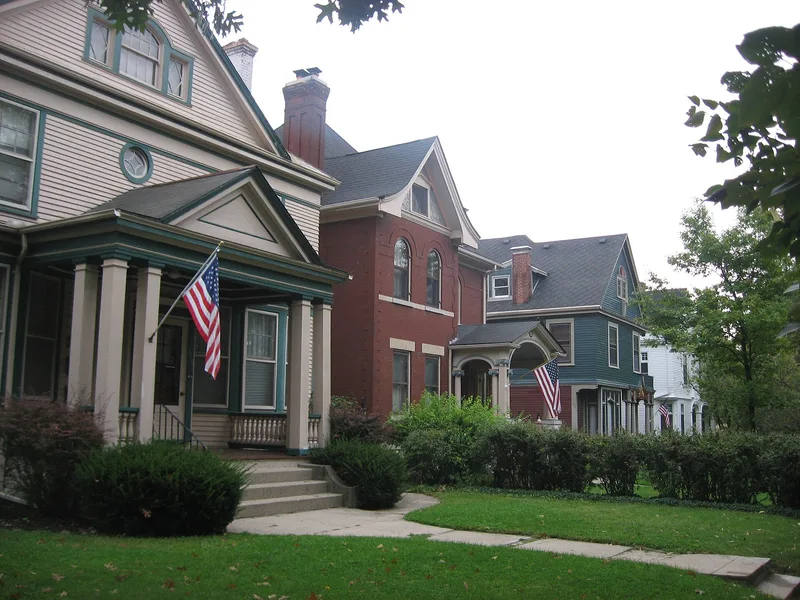
Central Avenue in Dayton's Dayton View area holds a grouping of fifteen historic houses, built between about 1869 and the early 1900s and shaded by large old maple trees. Styles include Queen Anne, Neoclassical, Italianate, and Jacobethan Revival, and many lots retain carriage houses at the rear with alley access. Two Queen Annes on corner lots, set back on two sides in early suburban fashion, are considered pivotal; those at 338 and 240 Central Avenue rank among the finest of their style in the city. The street was built for rising professionals and businessmen, including attorneys, company officers, and a school principal, during a period when Dayton's population grew from 38,678 in 1880 to 85,333 in 1900. The houses predate much of the surrounding neighborhood and are described as a physical link to the city's early suburban growth. Condition varies, with some houses well kept and others deteriorated.
Machine-generated summary. This summary was generated by a language model from the official nomination document and has not been reviewed line by line by an editor. It may contain errors. Check the source document before relying on any detail. Source: nomination document (PDF) · catalog entry. Generated October 2026 (model claude-sonnet-5-5, prompt v1.0-2026-10-29).
| Period of significance | 1800-1899, 1900- |
|---|---|
| Styles | Queen Anne, Neoclassical, Italianate, and Jacobethan Revival |
| Areas of significance | Architecture, Social History |
| Acreage | 8 |
| Boundary source | NPS cultural-resource GIS polygon |
| Full listing page | Central Avenue Historic District (property record) |
What listing means for this property
This is a historic district. Buildings within its boundary are either contributing (they add to the district's significance) or non-contributing. Owners of contributing income-producing buildings can claim the 20% federal rehabilitation tax credit; homeowners should look at state credits. National Register districts impose no design review by themselves; a local historic district ordinance, if one exists, does (the difference explained).
General information, not legal or tax advice. Rules change; confirm with your State Historic Preservation Office or a qualified adviser.