Cascade Locks Historic District

Why it's listed
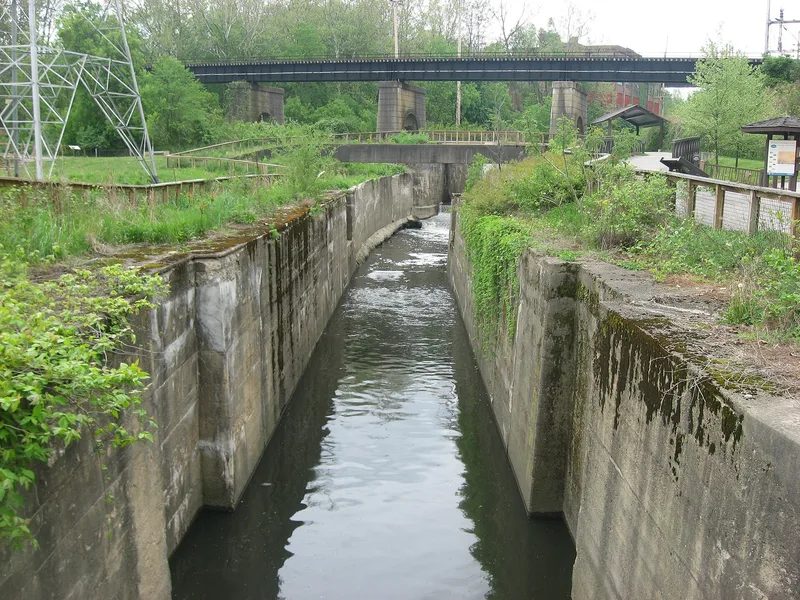
Northwest of downtown Akron, a ravine holds a string of Ohio & Erie Canal locks, numbers 10 through 18, along with wasteways, a mill race, a diversion dam, railroad bridges and a handful of industrial and residential buildings. The sandstone locks, each with a 90-foot chamber 15 feet wide, were lined with concrete during the 1907-11 statewide renovation, though original stone remains visible at the base of most walls. Canal construction began in 1825 alongside the founding of Akron, and the number of locks slowed travel enough to foster the town's growth. Mills drew power from a parallel hydraulic race, and later a steam plant, a rubber factory and rail lines, including a spur serving the valley's industries, joined the landscape. Buildings include a Greek Revival house built for Frederick Mustill. The district was listed for its local importance in industry, transportation, architecture and engineering, covering the years 1827 to 1930.
Machine-generated summary. This summary was generated by a language model from the official nomination document and has not been reviewed line by line by an editor. It may contain errors. Check the source document before relying on any detail. Source: nomination document (PDF) · catalog entry. Generated October 2026 (model claude-sonnet-5-5, prompt v1.0-2026-10-29).
| Period of significance | 1827 - 1930 |
|---|---|
| Styles | Commercial Style, Greek Revival, No Style |
| Areas of significance | Industry, Engineering, Transportation, Architecture |
| Acreage | 25 |
| Boundary source | NPS cultural-resource GIS polygon |
| Full listing page | Cascade Locks Historic District (property record) |
What listing means for this property
This is a historic district. Buildings within its boundary are either contributing (they add to the district's significance) or non-contributing. Owners of contributing income-producing buildings can claim the 20% federal rehabilitation tax credit; homeowners should look at state credits. National Register districts impose no design review by themselves; a local historic district ordinance, if one exists, does (the difference explained).
General information, not legal or tax advice. Rules change; confirm with your State Historic Preservation Office or a qualified adviser.