Bucyrus Commercial Historic District

Why it's listed
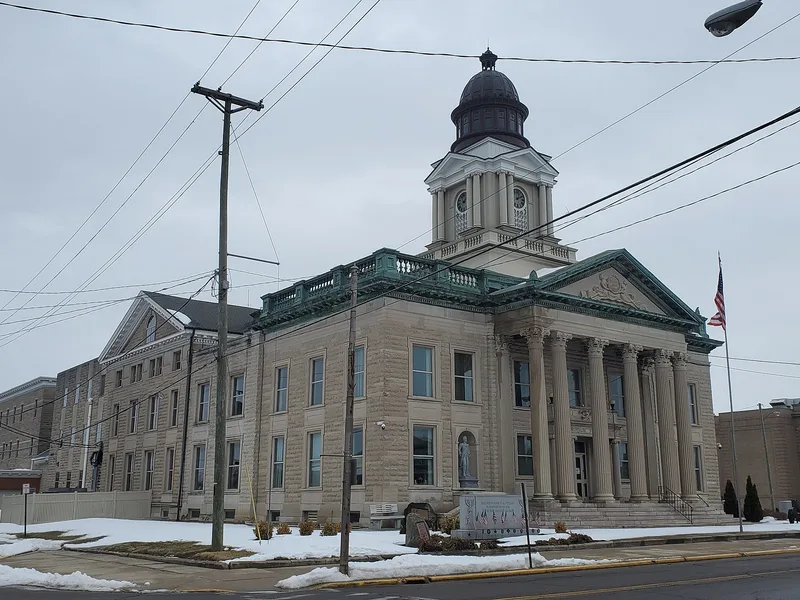
Downtown Bucyrus, Ohio, is represented by a district of seventy-five buildings centered on Washington Square and extending along Sandusky Avenue, Mansfield Street and a block of North Walnut Street. Built between the mid-1800s and the 1930s, the buildings include Victorian Gothic, Italianate, Beaux Arts Classicism and Art Deco examples, along with vernacular designs. Fifty-eight structures and one open space contribute to its character, while seventeen buildings do not. The district reflects the town's role as the commercial and civic center of Crawford County. Growth followed the Columbus and Sandusky Turnpike, the arrival of the railroad in 1853, and later interurban lines. Manufacturers of clay machinery, cranes, plows and railway shop work added to local prosperity. Notable buildings include the three-story Quinby Block of 1858-1859, described as one of the largest business blocks in northern Ohio, and the Bucyrus City Bank of 1881. Many ground-floor storefronts have been altered, though upper stories often keep original detail.
Machine-generated summary. This summary was generated by a language model from the official nomination document and has not been reviewed line by line by an editor. It may contain errors. Check the source document before relying on any detail. Source: nomination document (PDF) · catalog entry. Generated October 2026 (model claude-sonnet-5-5, prompt v1.0-2026-10-29).
| Styles | Victorian Gothic, Italianate, Beaux Arts Classicism, Art Deco, and vernacular interpretations |
|---|---|
| Areas of significance | Commerce, Politics/Government, Architecture |
| Acreage | 18 |
| Boundary source | NPS cultural-resource GIS polygon |
| Full listing page | Bucyrus Commercial Historic District (property record) |
What listing means for this property
This is a historic district. Buildings within its boundary are either contributing (they add to the district's significance) or non-contributing. Owners of contributing income-producing buildings can claim the 20% federal rehabilitation tax credit; homeowners should look at state credits. National Register districts impose no design review by themselves; a local historic district ordinance, if one exists, does (the difference explained).
General information, not legal or tax advice. Rules change; confirm with your State Historic Preservation Office or a qualified adviser.