Betts-Longworth Historic District

Why it's listed
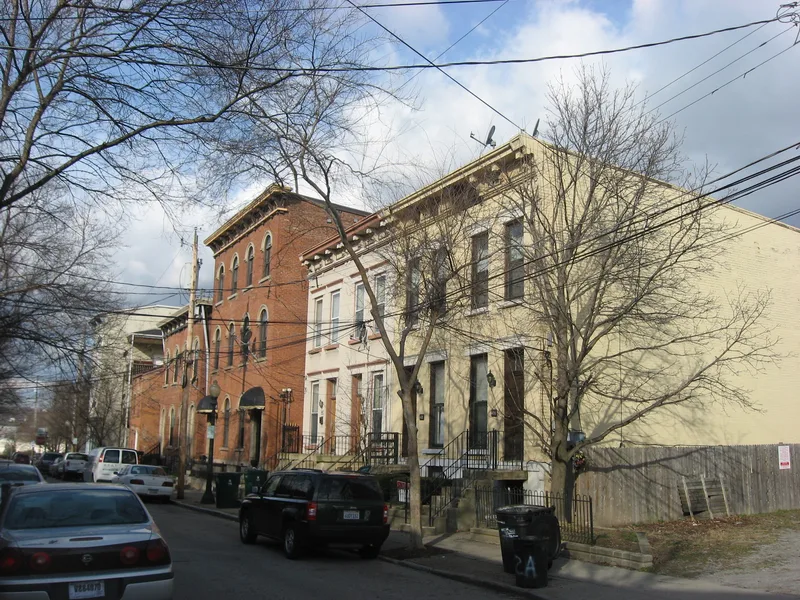
Betts-Longworth is a five-block by two-block neighborhood of 135 buildings in Cincinnati's West End, within the Queensgate II Redevelopment District. Most are brick, built mainly between the 1840s and 1900, and the styles include Federal Vernacular, Greek Revival, Italianate and Queen Anne. Notable pieces include seven Italianate apartment houses built in 1867-69 along Ezzard Charles Drive, cast iron storefronts along Central Avenue, and the Betts farmhouse at 416 Clark Street, dated circa 1804. A small United Jewish Cemetery, with interments from 1821 to 1849, sits near Chestnut Street. The area developed from three subdivisions, the Betts, Blachley and Longworth lots. Betts lots cost more and drew managers and owners, including soap maker James Gamble, while the other two subdivisions housed mostly working residents. The district retains its nineteenth-century character with no significant intrusions, although many buildings are deteriorated and several lots are vacant after demolitions.
Machine-generated summary. This summary was generated by a language model from the official nomination document and has not been reviewed line by line by an editor. It may contain errors. Check the source document before relying on any detail. Source: nomination document (PDF) · catalog entry. Generated October 2026 (model claude-sonnet-5-5, prompt v1.0-2026-10-29).
| Styles | Italianate, Queen Anne, Federal Vernacular, Greek Revival |
|---|---|
| Areas of significance | Historic - Non-Aboriginal, Architecture |
| Acreage | 12.4 |
| Boundary source | NPS cultural-resource GIS polygon |
| Full listing page | Betts-Longworth Historic District (property record) |
What listing means for this property
This is a historic district. Buildings within its boundary are either contributing (they add to the district's significance) or non-contributing. Owners of contributing income-producing buildings can claim the 20% federal rehabilitation tax credit; homeowners should look at state credits. National Register districts impose no design review by themselves; a local historic district ordinance, if one exists, does (the difference explained).
General information, not legal or tax advice. Rules change; confirm with your State Historic Preservation Office or a qualified adviser.