Ault-Weygandt Farm

Why it's listed
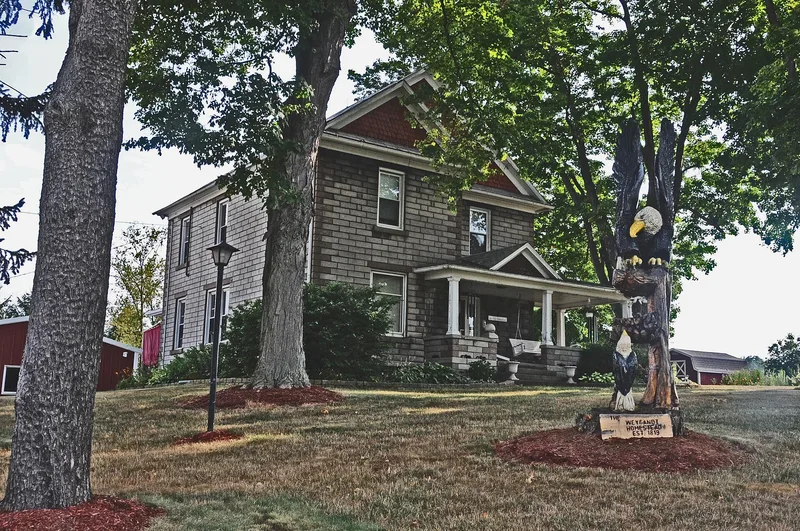
Three miles northeast of Orrville, this 91.3-acre Wayne County farm has been worked by the Weygandt family for five generations. Its centerpiece is a Sweitzer barn built about 1827 by Frederick Ault and enlarged around 1870. The barn keeps a hand-hewn timber frame joined by the scribe rule method, marked with Roman numeral "marriage marks." It also retains an oak threshing floor, windlasses for raising wagons, and extensive grain bins. The farmhouse replaced an earlier brick house damaged by a windstorm in 1913. Interior fittings came from a mail-order package from the Chicago House Wrecking Company, and the walls are cast concrete block made by the Orrville Cast Stone Company, finished in 1917. The house blends late Queen Anne and Colonial Revival details. A corn crib and an animal shelter/chicken coop complete the courtyard-plan farmstead. The property was recognized for its architecture and its record of northeastern Ohio farming from about 1827 to 1951.
Machine-generated summary. This summary was generated by a language model from the official nomination document and has not been reviewed line by line by an editor. It may contain errors. Check the source document before relying on any detail. Source: nomination document (PDF) · catalog entry. Generated October 2026 (model claude-sonnet-5-5, prompt v1.0-2026-10-29).
| Period of significance | ca. 1827-1951 |
|---|---|
| Styles | Late Victorian/Queen Anne; 20th Century Revival/Colonial Revival |
| Areas of significance | Architecture, Agriculture |
| Boundary source | NPS cultural-resource GIS polygon |
| Full listing page | Ault-Weygandt Farm (property record) |
What listing means for this property
This is a historic district. Buildings within its boundary are either contributing (they add to the district's significance) or non-contributing. Owners of contributing income-producing buildings can claim the 20% federal rehabilitation tax credit; homeowners should look at state credits. National Register districts impose no design review by themselves; a local historic district ordinance, if one exists, does (the difference explained).
General information, not legal or tax advice. Rules change; confirm with your State Historic Preservation Office or a qualified adviser.