Athens State Hospital

Why it's listed
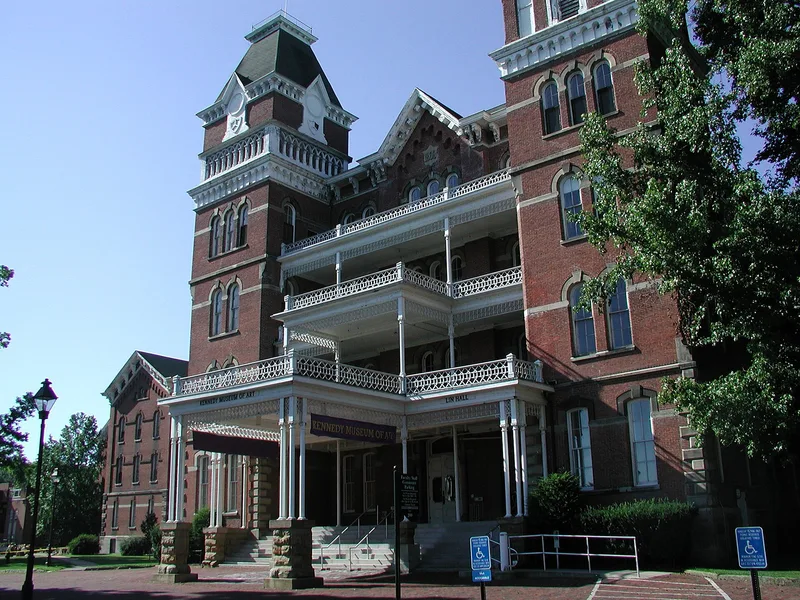
Athens State Hospital is a complex of about twenty brick institutional buildings on hilly, wooded grounds at the edge of Athens, Ohio. Its centerpiece is the large main building of 1868-1873, designed in the High Victorian Italianate style with twin towers and symmetrical wings. It follows the Kirkbride Plan and is one of three such buildings remaining in Ohio. In 1885 the hospital added huge dining rooms that, according to the nomination, were the first of their kind in American asylums. Later buildings include a 1901 Neoclassical auditorium and several Georgian Revival cottages from 1903, designed largely by architect Frank Packard and built by Athens contractor Henry O'Bleness. Brick drives, mature shade trees and old streetlights preserve a turn-of-the-century setting. The original landscaped park was largely destroyed in 1968 when the Hocking River was rerouted and Route 682 extended. Listing recognized the surviving buildings for their architecture and for the hospital's role in mental health care in southeastern Ohio.
Machine-generated summary. This summary was generated by a language model from the official nomination document and has not been reviewed line by line by an editor. It may contain errors. Check the source document before relying on any detail. Source: nomination document (PDF) · catalog entry. Generated October 2026 (model claude-sonnet-5-5, prompt v1.0-2026-10-29).
| Period of significance | 1868-1983; scattered dates between 1885-1924 |
|---|---|
| Styles | High Victorian Italianate main building, with Neoclassical Revival, Georgian Revival, Second Renaissance Revival influence and Eclectic buildings |
| Areas of significance | Architecture, Social History |
| Acreage | 60 |
| Boundary source | NPS cultural-resource GIS polygon |
| Full listing page | Athens State Hospital (property record) |
What listing means for this property
This is a historic district. Buildings within its boundary are either contributing (they add to the district's significance) or non-contributing. Owners of contributing income-producing buildings can claim the 20% federal rehabilitation tax credit; homeowners should look at state credits. National Register districts impose no design review by themselves; a local historic district ordinance, if one exists, does (the difference explained).
General information, not legal or tax advice. Rules change; confirm with your State Historic Preservation Office or a qualified adviser.