Yanceyville Historic District
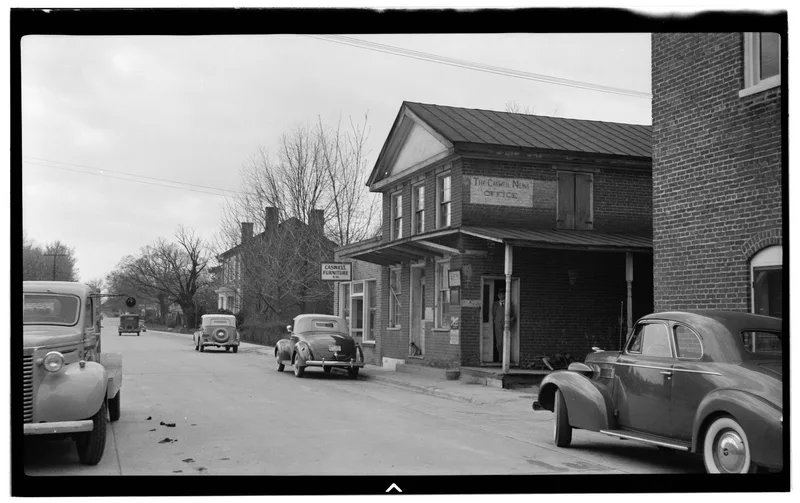
Why it's listed
Yanceyville's historic district covers the courthouse square and three blocks of West Main Street in Caswell County, North Carolina. The county seat was established in 1791 and grew slowly until the 1830s, when a tobacco-fueled boom brought a new courthouse, a Presbyterian church, stores and substantial brick houses. Most surviving buildings date from that period and are in the Greek Revival style. They range from Dongola, a columned mansion built between 1835 and 1838, to the modest Abisha Slade House and the sturdy Brick Store. Two early Federal houses, the Thornton and Paul Haralson houses, predate the boom. The present courthouse, built between 1857 and 1861 and designed by John Williams Cosby, combines Italian Romanesque and Classical features and contrasts with the surrounding Greek Revival fabric. Little was built between 1865 and 1900, so the antebellum character survived. The district is cited as one of the largest and most consistent groupings of Greek Revival buildings in North Carolina.
Machine-generated summary. This summary was generated by a language model from the official nomination document and has not been reviewed line by line by an editor. It may contain errors. Check the source document before relying on any detail. Source: nomination document (PDF) · catalog entry. Generated October 2026 (model claude-sonnet-5-5, prompt v1.0-2026-10-29).
| Styles | Greek Revival, with Federal, Victorian Romanesque and Classical, Romanesque Revival and Italianate buildings |
|---|---|
| Areas of significance | Commerce, Agriculture, Architecture |
| Acreage | 30 |
| Boundary source | NPS cultural-resource GIS polygon |
| Full listing page | Yanceyville Historic District (property record) |
What listing means for this property
This is a historic district. Buildings within its boundary are either contributing (they add to the district's significance) or non-contributing. Owners of contributing income-producing buildings can claim the 20% federal rehabilitation tax credit; homeowners should look at state credits. National Register districts impose no design review by themselves; a local historic district ordinance, if one exists, does (the difference explained).
General information, not legal or tax advice. Rules change; confirm with your State Historic Preservation Office or a qualified adviser.