Westbrook-Ardmore Historic District

Why it's listed
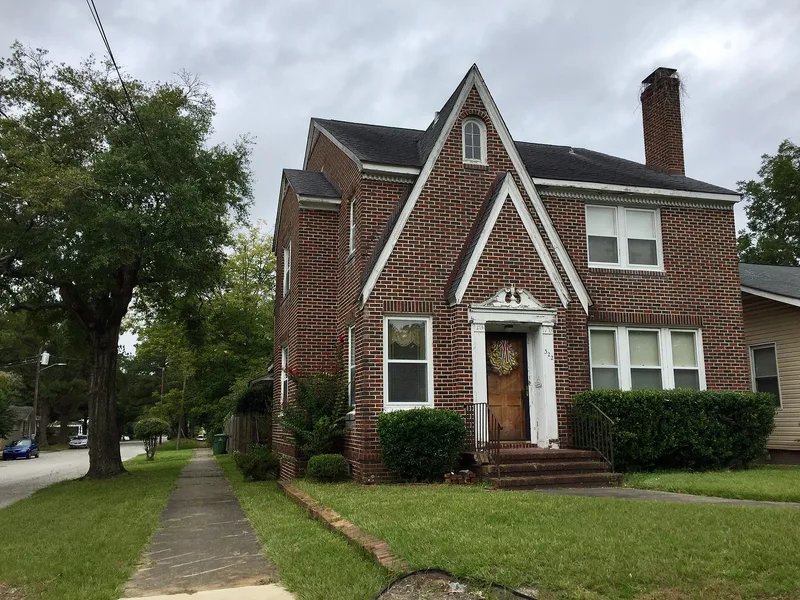
Westbrook-Ardmore is a residential district of six early twentieth-century subdivisions on the eastern edge of Wilmington, North Carolina. Developers gave each subdivision its own name, including The Bronx, Manhattan, Carolina Court, Pinehurst, Westbrook, Westbrook Gardens and Ardmore. The houses are mostly one- and two-story bungalows with broad front porches, set back on tree-lined lots with paved streets and sidewalks. Building began around 1914 along Dock Street and South Fifteenth and Sixteenth Streets and continued until the mid-1950s. The neighborhood grew along the streetcar line on Seventeenth Street, which ran until 1940, and includes small churches, convenience stores and former gas stations. The district is listed for its planned suburban development and for the range of popular architectural styles it contains, from Craftsman bungalows to Late Gothic Revival churches and Moderne service stations. St. Matthew's Evangelical Lutheran Church, completed in 1942, is among its notable buildings.
Machine-generated summary. This summary was generated by a language model from the official nomination document and has not been reviewed line by line by an editor. It may contain errors. Check the source document before relying on any detail. Source: nomination document (PDF) · catalog entry. Generated October 2026 (model claude-haiku-5-5, prompt v1.1-2026-10-29).
| Period of significance | ca. 1914-1956 |
|---|---|
| Styles | Craftsman/California Bungalow; Colonial Revival; Late Gothic Revival; Mission/Spanish Colonial; Moderne; Commercial Style; Mediterranean Revival; Period Cottage; Ranch; Minimal Traditional |
| Areas of significance | Architecture, Community Planning and Development |
| Acreage | 134 |
| Boundary source | NPS cultural-resource GIS polygon |
| Full listing page | Westbrook-Ardmore Historic District (property record) |
What listing means for this property
This is a historic district. Buildings within its boundary are either contributing (they add to the district's significance) or non-contributing. Owners of contributing income-producing buildings can claim the 20% federal rehabilitation tax credit; homeowners should look at state credits. National Register districts impose no design review by themselves; a local historic district ordinance, if one exists, does (the difference explained).
General information, not legal or tax advice. Rules change; confirm with your State Historic Preservation Office or a qualified adviser.