West High Street Historic District

The National Park Service has not published a boundary polygon for this district; the map shows the listed properties inside it and the district's reference point.
Why it's listed
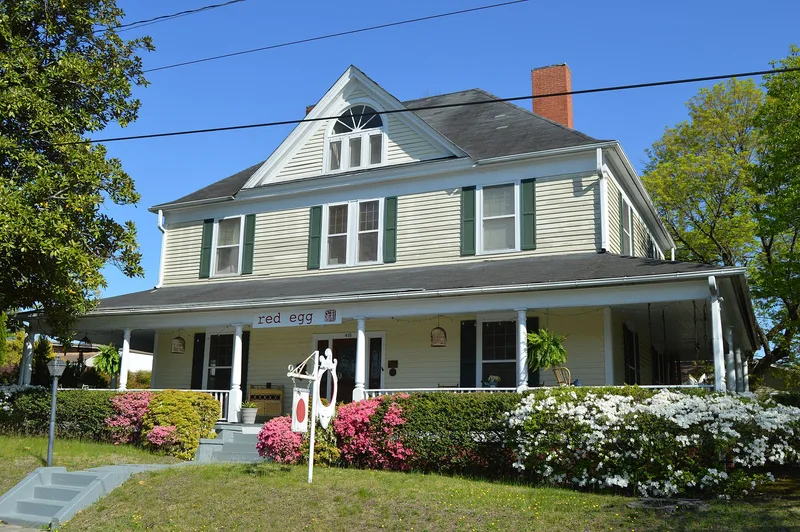
Eleven historic buildings and one garden make up this compact district of about four acres three blocks west of Main Street in central High Point, North Carolina. Built between 1879 and 1922, the group combines houses, outbuildings, a school and a factory along the North Carolina Railroad tracks. Blair School, a frame building constructed in 1879, is the oldest surviving school in the city and was later moved on its site. The 1897 Brown House is regarded as one of the finest Queen Anne houses in High Point. The Fraser-Wilson House, completed in 1905 for furniture manufacturer Henry W. Fraser, is a large Colonial Revival residence with a Palladian dormer and sixteen Ionic columns on its porch. The district is significant for its concentration of homes built by early manufacturers who lived near their factories, reflecting the walking-based downtown development of the late nineteenth and early twentieth centuries. Its architecture also documents the stylistic range of High Point's first furniture boom.
Machine-generated summary. This summary was generated by a language model from the official nomination document and has not been reviewed line by line by an editor. It may contain errors. Check the source document before relying on any detail. Source: nomination document (PDF) · catalog entry. Generated October 2026 (model claude-haiku-5-5, prompt v1.1-2026-10-29).
| Period of significance | 1879-1922 |
|---|---|
| Styles | Queen Anne, Colonial Revival, Bungalow/Craftsman, Late Victorian |
| Areas of significance | Community Planning and Development, Architecture |
| Acreage | 5 |
| Boundary source | not published |
| Full listing page | West High Street Historic District (property record) |
What listing means for this property
This is a historic district. Buildings within its boundary are either contributing (they add to the district's significance) or non-contributing. Owners of contributing income-producing buildings can claim the 20% federal rehabilitation tax credit; homeowners should look at state credits. National Register districts impose no design review by themselves; a local historic district ordinance, if one exists, does (the difference explained).
General information, not legal or tax advice. Rules change; confirm with your State Historic Preservation Office or a qualified adviser.