Waxhaw-Weddington Roads Historic District

Why it's listed
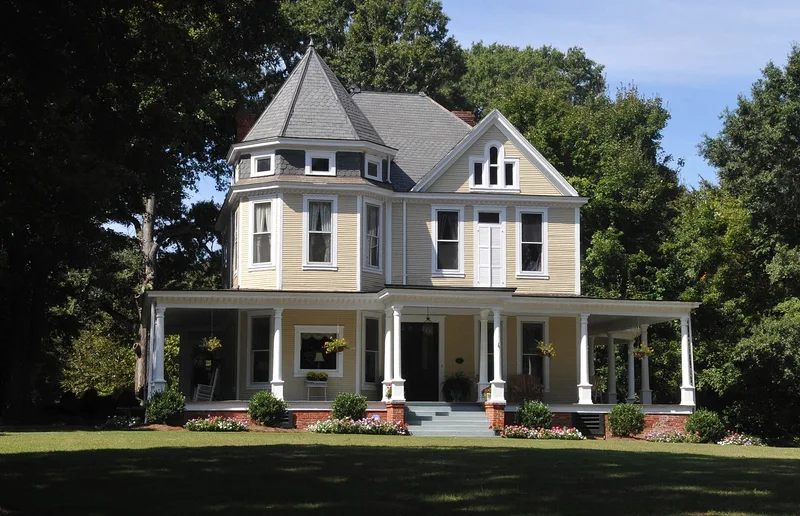
Five substantial houses cluster where Waxhaw Road splits into North Carolina Highways 75 and 84 west of Monroe. Built between about 1897 and 1916, they include the Queen Anne style Heath House in the fork of the road, the Neo-Classical Revival Robert B. Redwine House with its tenant house, Crow's Nest, and the Prairie and Classical Revival style Edward Crow House. Each sits well back from the road among mature trees and is surrounded by barns, garages, tenant houses and other outbuildings. By the end of World War I the group was known locally as "West Monroe." The houses were homes to businessmen and civic figures who were prominent in Monroe's commercial, industrial, political and judicial life, and who farmed here partly as a hobby. Charlotte architect Charles Christian Hook prepared plans for the Heath House in 1897 and had designed a house for R. B. Redwine earlier that year. The district contains 21 contributing and 5 noncontributing resources, and was recognized for its architecture and its association with these residents.
Machine-generated summary. This summary was generated by a language model from the official nomination document and has not been reviewed line by line by an editor. It may contain errors. Check the source document before relying on any detail. Source: nomination document (PDF) · catalog entry. Generated October 2026 (model claude-sonnet-5-5, prompt v1.0-2026-10-29).
| Period of significance | 1897-1938 |
|---|---|
| Styles | Queen Anne, Classical Revival, Prairie School |
| Areas of significance | Architecture, Social History |
| Acreage | 36 |
| Boundary source | NPS cultural-resource GIS polygon |
| Full listing page | Waxhaw-Weddington Roads Historic District (property record) |
What listing means for this property
This is a historic district. Buildings within its boundary are either contributing (they add to the district's significance) or non-contributing. Owners of contributing income-producing buildings can claim the 20% federal rehabilitation tax credit; homeowners should look at state credits. National Register districts impose no design review by themselves; a local historic district ordinance, if one exists, does (the difference explained).
General information, not legal or tax advice. Rules change; confirm with your State Historic Preservation Office or a qualified adviser.