Trinity Cemetery

The National Park Service has not published a boundary polygon for this district; the map shows the listed properties inside it and the district's reference point.
Why it's listed
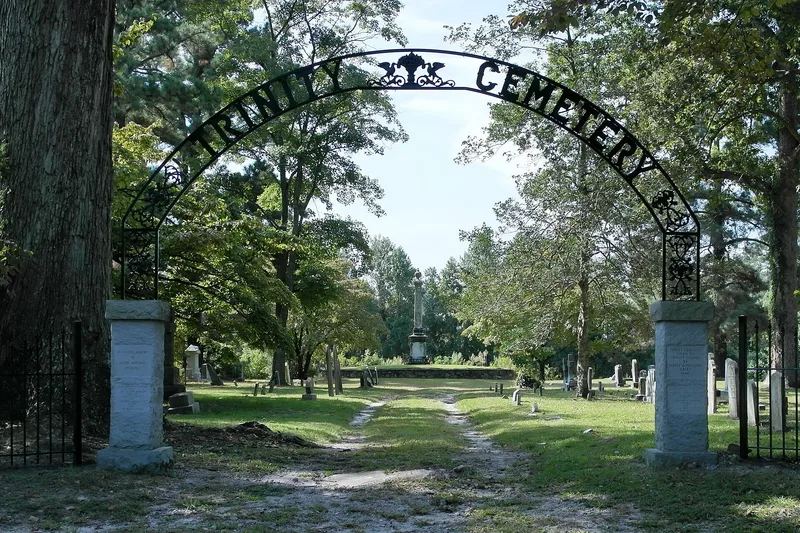
Trinity Cemetery is a small rural burial ground on a slight rise south of NC 33, near present-day Chocowinity in Beaufort County. The land was deeded to the Trinity Chapel congregation in 1860 by Penelope and Apsley Grist, and the cemetery was laid out in a grid of sixteen squares divided by walks, with 352 gravemarkers in the original section. Most markers are marble or granite, with segmental-arched and other tympanum shapes, and three bear signatures of their stonecarvers. The cemetery is the largest surviving trace of the community of Godley's Crossroads, whose church was moved to modern Chocowinity in 1938. Its stones record a high rate of infant and child deaths in the late nineteenth century. The cenotaph of Major General Bryan Grimes, who was killed in 1880, is its most elaborate monument. Its grave markers and family groupings are regarded as reflecting the community's faith, social life and funerary art.
Machine-generated summary. This summary was generated by a language model from the official nomination document and has not been reviewed line by line by an editor. It may contain errors. Check the source document before relying on any detail. Source: nomination document (PDF) · catalog entry. Generated October 2026 (model claude-haiku-5-5, prompt v1.1-2026-10-29).
| Period of significance | 1860-1938 |
|---|---|
| Areas of significance | Social History, Art |
| Acreage | 1 |
| Boundary source | not published |
| Full listing page | Trinity Cemetery (property record) |
What listing means for this property
This is a historic district. Buildings within its boundary are either contributing (they add to the district's significance) or non-contributing. Owners of contributing income-producing buildings can claim the 20% federal rehabilitation tax credit; homeowners should look at state credits. National Register districts impose no design review by themselves; a local historic district ordinance, if one exists, does (the difference explained).
General information, not legal or tax advice. Rules change; confirm with your State Historic Preservation Office or a qualified adviser.