Rosemount-McIver Park Historic District

Why it's listed
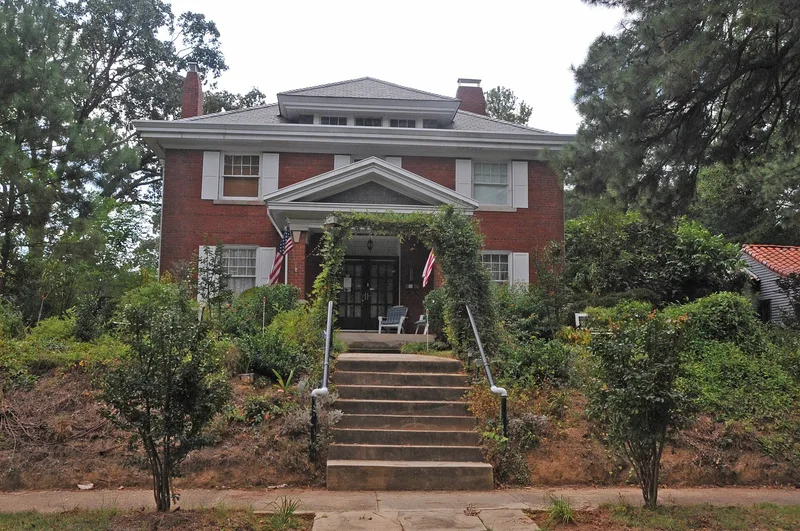
Rosemount-McIver Park is an area of about eighty acres next to downtown Sanford, North Carolina, formed by two neighborhoods with different layouts. Rosemount, the older, follows a rectangular street grid laid out about 1910. McIver Park, planned in the mid-1920s, uses curving streets, including Summit and Sunset drives, known locally as the Loop, along Dry Creek. Brick and granite gateways mark some entrances. Between the world wars this was Sanford's most fashionable residential area. Its houses range from compact bungalows and cottages to large Tudor and Colonial Revival homes, in frame, brick and brick tile. Many have original garages and sheds, and landscaping includes azalea beds and retaining walls of brick and local brownstone. Houses were built for local business figures, including brick manufacturer Lewis D. Isenhour and builder William L. Jewell. Eighty-six percent of the main buildings contribute to the district's historic character, and most keep enough integrity despite some siding replacement and post-war infill.
Machine-generated summary. This summary was generated by a language model from the official nomination document and has not been reviewed line by line by an editor. It may contain errors. Check the source document before relying on any detail. Source: nomination document (PDF) · catalog entry. Generated October 2026 (model claude-sonnet-5-5, prompt v1.0-2026-10-29).
| Styles | Queen Anne, Colonial Revival, Tudor Revival, Spanish Colonial Revival, Craftsman |
|---|---|
| Areas of significance | Architecture, Community Planning and Development |
| Acreage | 80 |
| Boundary source | NPS cultural-resource GIS polygon |
| Full listing page | Rosemount-McIver Park Historic District (property record) |
What listing means for this property
This is a historic district. Buildings within its boundary are either contributing (they add to the district's significance) or non-contributing. Owners of contributing income-producing buildings can claim the 20% federal rehabilitation tax credit; homeowners should look at state credits. National Register districts impose no design review by themselves; a local historic district ordinance, if one exists, does (the difference explained).
General information, not legal or tax advice. Rules change; confirm with your State Historic Preservation Office or a qualified adviser.