Randolph Street Historic District

Why it's listed
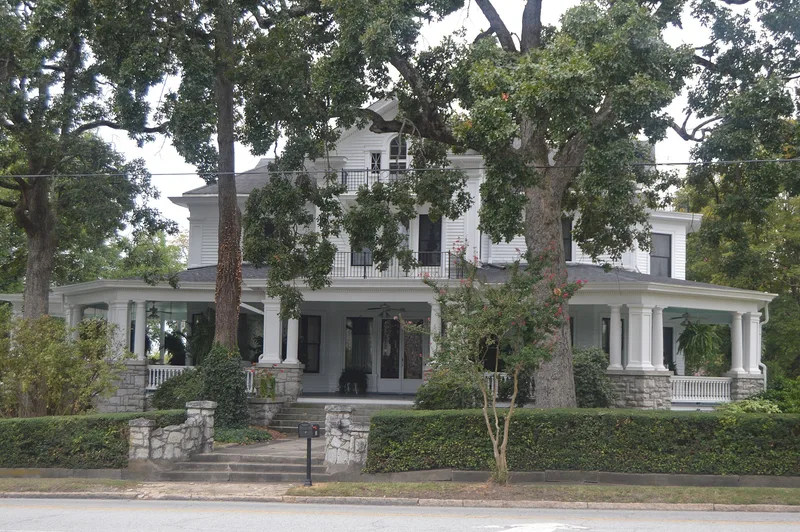
Along Randolph Street, just south of Thomasville's historic downtown, the district gathers seven primary resources built between about 1900 and 1951. They include three houses, a church, two industrial buildings and a railroad depot, set in a pattern where factory owners lived beside their works and middle-class workers' homes stood nearby. The Hinkle Family House, built around 1900, is the oldest building, and the Frank S. Lambeth House of 1908 is a large Colonial Revival dwelling tied to the Standard Chair Company. The Arthur J. Kepley House, dating to about 1928, is a characteristic 1920s bungalow. Memorial Methodist Church, completed in 1951 to designs by Charlotte architect Marvin W. Helms, is a stone Neo-Gothic building. The Carolina and Yadkin Valley Railroad depot, built in 1913 and enlarged in 1926 and 1936, reflects the second rail line that supported local industry. The district has a high degree of integrity, and its period of significance runs to 1962.
Machine-generated summary. This summary was generated by a language model from the official nomination document and has not been reviewed line by line by an editor. It may contain errors. Check the source document before relying on any detail. Source: nomination document (PDF) · catalog entry. Generated October 2026 (model claude-haiku-5-5, prompt v1.1-2026-10-29).
| Period of significance | ca. 1900-1962 |
|---|---|
| Styles | Colonial Revival; Bungalow/Craftsman; Late Victorian; Neo-Gothic |
| Areas of significance | Architecture, Transportation |
| Acreage | 14 |
| Boundary source | NPS cultural-resource GIS polygon |
| Full listing page | Randolph Street Historic District (property record) |
What listing means for this property
This is a historic district. Buildings within its boundary are either contributing (they add to the district's significance) or non-contributing. Owners of contributing income-producing buildings can claim the 20% federal rehabilitation tax credit; homeowners should look at state credits. National Register districts impose no design review by themselves; a local historic district ordinance, if one exists, does (the difference explained).
General information, not legal or tax advice. Rules change; confirm with your State Historic Preservation Office or a qualified adviser.