North Carolina Central University

Why it's listed
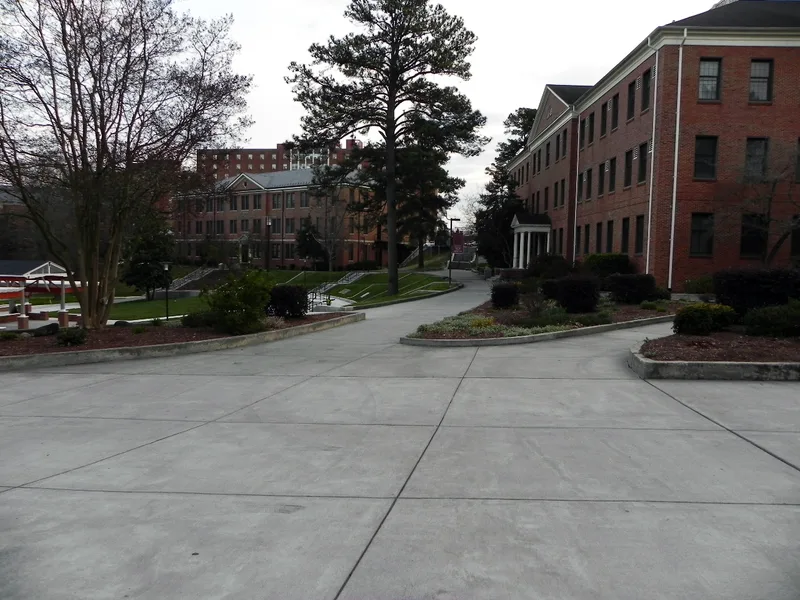
North Carolina Central University occupies a campus about a mile southeast of downtown Durham. The nominated area holds eleven buildings, centered on the Clyde R. Hoey Administration Building and a sunken courtyard. Most are brick Georgian Revival structures with slate hipped roofs and limestone details. The Durham firm of Atwood and Nash designed Hoey, Dunn and Shepard halls in 1929 and 1930. Five more buildings followed in the late 1930s under a Public Works Administration program, echoing those earlier designs. The school began in 1909 as a private training school founded by Dr. James E. Shepard, became a state institution in 1923, and in 1925 was reorganized as the North Carolina College for Negroes, described as the nation's first state-supported four-year liberal arts college for Black students. The campus reflects Shepard's leadership and the achievements of Durham's Black community in the early twentieth century. Landscaped terraces, stone benches and tree-filled grounds complete the setting.
Machine-generated summary. This summary was generated by a language model from the official nomination document and has not been reviewed line by line by an editor. It may contain errors. Check the source document before relying on any detail. Source: nomination document (PDF) · catalog entry. Generated October 2026 (model claude-sonnet-5-5, prompt v1.0-2026-10-29).
| Period of significance | 1929-30; 1935-39 (specific dates stated) |
|---|---|
| Styles | Georgian Revival |
| Areas of significance | Black, Education, Architecture |
| Acreage | 10.6 |
| Boundary source | NPS cultural-resource GIS polygon |
| Full listing page | North Carolina Central University (property record) |
What listing means for this property
This is a historic district. Buildings within its boundary are either contributing (they add to the district's significance) or non-contributing. Owners of contributing income-producing buildings can claim the 20% federal rehabilitation tax credit; homeowners should look at state credits. National Register districts impose no design review by themselves; a local historic district ordinance, if one exists, does (the difference explained).
General information, not legal or tax advice. Rules change; confirm with your State Historic Preservation Office or a qualified adviser.