Nags Head Beach Cottages Historic District

Why it's listed
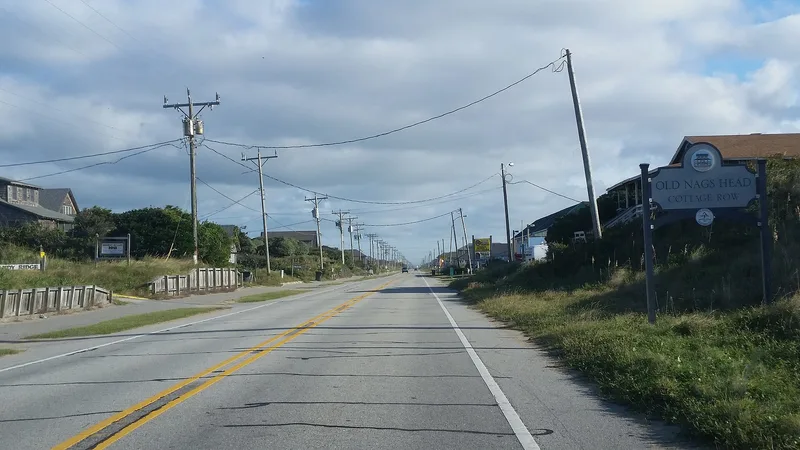
Along the Atlantic shore at Nags Head, a row of frame, wood-shingled cottages runs for nine-tenths of a mile between US 158 and the ocean. Most are gray-brown, with sweeping gable roofs, broad porches and high timber-piling foundations that keep them above storm waves and open to breezes. The most common type is the large 1½-story bungaloid cottage, many built between 1910 and 1940 by Elizabeth City builder Samuel J. Twine. Older two-story gable-roof houses, hip-roofed examples and a single Queen Anne style cottage add variety. Recurring details include porch benches that slope outward, batten doors and awning-style shutters. Interiors are plain, often with exposed studs. Families from northeastern North Carolina have summered here since the nineteenth century, and a few cottages are thought to contain cores from the 1860s and 1870s. The district was recognized because it keeps its original resort character, and its boundary reaches into the ocean to protect the open view and possible shipwreck sites.
Machine-generated summary. This summary was generated by a language model from the official nomination document and has not been reviewed line by line by an editor. It may contain errors. Check the source document before relying on any detail. Source: nomination document (PDF) · catalog entry. Generated October 2026 (model claude-sonnet-5-5, prompt v1.0-2026-10-29).
| Styles | Vernacular beach cottages, mainly bungaloid 1½-story, two-story gable-roof and hip-roof types; one Queen Anne style cottage |
|---|---|
| Areas of significance | Entertainment/Recreation, Architecture, Social History |
| Acreage | 2083 |
| Boundary source | NPS cultural-resource GIS polygon |
| Full listing page | Nags Head Beach Cottages Historic District (property record) |
What listing means for this property
This is a historic district. Buildings within its boundary are either contributing (they add to the district's significance) or non-contributing. Owners of contributing income-producing buildings can claim the 20% federal rehabilitation tax credit; homeowners should look at state credits. National Register districts impose no design review by themselves; a local historic district ordinance, if one exists, does (the difference explained).
General information, not legal or tax advice. Rules change; confirm with your State Historic Preservation Office or a qualified adviser.