Myers Park Historic District

Why it's listed
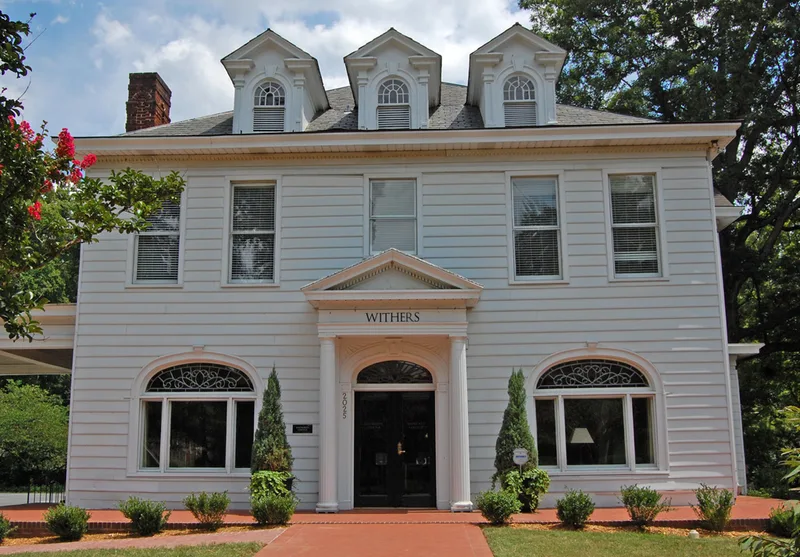
Myers Park is a planned streetcar suburb in Charlotte, North Carolina, begun in 1911 on a nearly treeless cotton farm. Landscape architect John Nolen designed its layout around a 110-foot-wide boulevard, Queens Road, with a trolley line in the median, curving side streets, parks and greenways. Earle Draper took over supervision in 1917, softened the curves and added an entrance at East Boulevard. Today the district holds 958 structures, mostly single-family houses built from the 1910s through the 1950s, with Colonial Revival, Bungalow, Rectilinear and Tudor Revival designs prominent. Leading Carolinas architects such as C.C. Hook and Louis Asbury worked here, and Hook's fifty-two-room mansion for James B. Duke is called Charlotte's finest Colonial Revival example. Deed restrictions kept front yards unfenced, and willow oaks planted in the 1920s now arch over the streets. Although some medians, gateway features and early houses have been altered or lost, the neighborhood largely keeps its planned character.
Machine-generated summary. This summary was generated by a language model from the official nomination document and has not been reviewed line by line by an editor. It may contain errors. Check the source document before relying on any detail. Source: nomination document (PDF) · catalog entry. Generated October 2026 (model claude-sonnet-5-5, prompt v1.0-2026-10-29).
| Styles | Colonial Revival, Bungalow, Rectilinear, Tudor Revival and Ranch |
|---|---|
| Areas of significance | Industry, Community Planning and Development, Landscape Architecture, Commerce, Architecture |
| Acreage | 597 |
| Boundary source | NPS cultural-resource GIS polygon |
| Full listing page | Myers Park Historic District (property record) |
What listing means for this property
This is a historic district. Buildings within its boundary are either contributing (they add to the district's significance) or non-contributing. Owners of contributing income-producing buildings can claim the 20% federal rehabilitation tax credit; homeowners should look at state credits. National Register districts impose no design review by themselves; a local historic district ordinance, if one exists, does (the difference explained).
General information, not legal or tax advice. Rules change; confirm with your State Historic Preservation Office or a qualified adviser.