Mount Pleasant Collegiate Institute Historic District

The National Park Service has not published a boundary polygon for this district; the map shows the listed properties inside it and the district's reference point.
Why it's listed
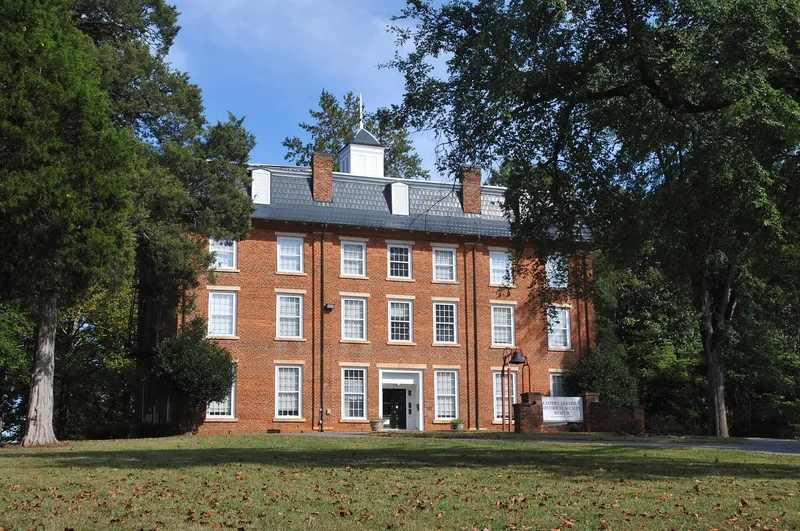
Six buildings on a hilltop in Mount Pleasant, Cabarrus County, make up a campus that housed three schools between 1855 and 1933. The North Carolina Synod of the Evangelical Lutheran Church founded the Western Carolina Male Academy in 1852. It was followed by North Carolina College and then the Mount Pleasant Collegiate Institute. The oldest buildings are the three-story brick Main Building and the frame President's House, both built in 1854-1855. Society Hall was completed by 1860, the Boarding House followed in 1868, and the New Dormitory was added in 1925. The nearby Greek Revival house of Matthias Barrier, an academy director who sold the land for the campus, is also included, along with three outbuildings. The school property was auctioned in 1941, and the buildings passed to separate owners and were altered. The district is recognized for its link to church-related education in North Carolina and for buildings that reflect Greek Revival influence on vernacular design.
Machine-generated summary. This summary was generated by a language model from the official nomination document and has not been reviewed line by line by an editor. It may contain errors. Check the source document before relying on any detail. Source: nomination document (PDF) · catalog entry. Generated October 2026 (model claude-sonnet-5-5, prompt v1.0-2026-10-29).
| Styles | Vernacular architecture with Greek Revival influence |
|---|---|
| Areas of significance | Education, Architecture, Religion, Social History |
| Acreage | 10.2 |
| Boundary source | not published |
| Full listing page | Mount Pleasant Collegiate Institute Historic District (property record) |
What listing means for this property
This is a historic district. Buildings within its boundary are either contributing (they add to the district's significance) or non-contributing. Owners of contributing income-producing buildings can claim the 20% federal rehabilitation tax credit; homeowners should look at state credits. National Register districts impose no design review by themselves; a local historic district ordinance, if one exists, does (the difference explained).
General information, not legal or tax advice. Rules change; confirm with your State Historic Preservation Office or a qualified adviser.