Mount Airy Historic District (Additional Documentation)

Why it's listed
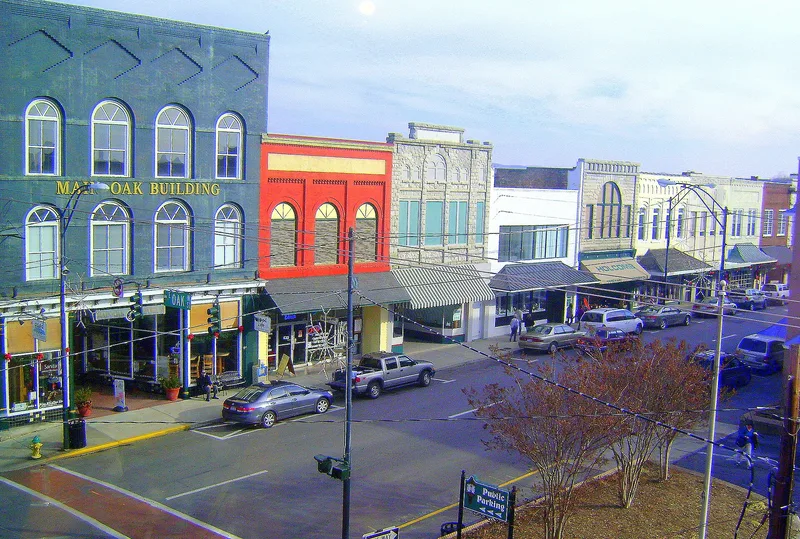
Mount Airy's historic district is the commercial and residential center of a largely rural county in north central North Carolina. It includes 248 buildings, most built between 1880 and 1930, arranged in a cross shape along Main Street and its side streets. Growth followed the arrival of the railroad in 1888, which brought tobacco warehouses, new businesses and substantial houses. The most distinctive feature is light-colored granite from a large open-face quarry just east of town, used for churches, banks, a hospital, a post office, house foundations, retaining walls and porch steps. Commercial blocks show Classical Revival, Romanesque Revival and Art Deco influences. Residences range from Italianate and Queen Anne to Colonial Revival, Neo-Classical and 1930s period revival designs. The houses are remarkably intact, with very little replacement siding or windows. Shaded sidewalks, deep lots and mature landscaping add to the character of the neighborhoods, which sit on ridges with views toward distant mountains.
Machine-generated summary. This summary was generated by a language model from the official nomination document and has not been reviewed line by line by an editor. It may contain errors. Check the source document before relying on any detail. Source: nomination document (PDF) · catalog entry. Generated October 2026 (model claude-sonnet-5-5, prompt v1.0-2026-10-29).
| Styles | Wide variety including Italianate, Queen Anne, Colonial Revival, Neo-Classical, Gothic Revival, Romanesque Revival, Art Deco, and period revival styles |
|---|---|
| Areas of significance | Industry, Commerce, Architecture |
| Acreage | 110 |
| Boundary source | NPS cultural-resource GIS polygon |
| Full listing page | Mount Airy Historic District (Additional Documentation) (property record) |
What listing means for this property
This is a historic district. Buildings within its boundary are either contributing (they add to the district's significance) or non-contributing. Owners of contributing income-producing buildings can claim the 20% federal rehabilitation tax credit; homeowners should look at state credits. National Register districts impose no design review by themselves; a local historic district ordinance, if one exists, does (the difference explained).
General information, not legal or tax advice. Rules change; confirm with your State Historic Preservation Office or a qualified adviser.