Monroe Residential Historic District

Why it's listed
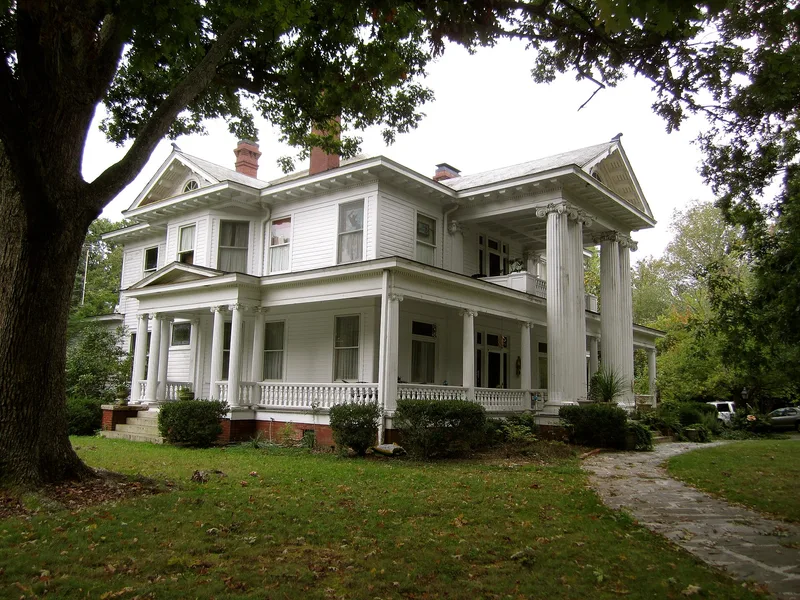
Monroe's residential historic district covers roughly 181 acres east, south and west of the downtown core in Union County, North Carolina. Most of the city's housing from 1870 to 1940 lies within its boundaries, from small cottages to large, imposing dwellings. Wood is the dominant material, with many brick-veneer bungalows and Colonial Revival houses from the 1920s and 1930s. Styles include Italianate, Second Empire, Queen Anne, Tudor, Spanish Mission, Colonial Revival and Craftsman, with Classical Revival the most prominent, including several large Neo-Classical houses with colossal porticos built between 1900 and 1915. The district also holds two churches, a senior citizens center, some houses converted to commercial use, and the oldest sections of Monroe Cemetery, where burials date from the 1850s. Streets follow a grid laid over rolling Piedmont hills and are lined with mature trees. Of 471 resources, 381 contribute to the district's character, and most houses are still used as homes.
Machine-generated summary. This summary was generated by a language model from the official nomination document and has not been reviewed line by line by an editor. It may contain errors. Check the source document before relying on any detail. Source: nomination document (PDF) · catalog entry. Generated October 2026 (model claude-sonnet-5-5, prompt v1.0-2026-10-29).
| Styles | Italianate, Second Empire, Queen Anne, Classical Revival, Colonial Revival, Craftsman, Tudor Revival, Spanish Mission |
|---|---|
| Areas of significance | Community Planning and Development, Architecture |
| Acreage | 181 |
| Boundary source | NPS cultural-resource GIS polygon |
| Full listing page | Monroe Residential Historic District (property record) |
What listing means for this property
This is a historic district. Buildings within its boundary are either contributing (they add to the district's significance) or non-contributing. Owners of contributing income-producing buildings can claim the 20% federal rehabilitation tax credit; homeowners should look at state credits. National Register districts impose no design review by themselves; a local historic district ordinance, if one exists, does (the difference explained).
General information, not legal or tax advice. Rules change; confirm with your State Historic Preservation Office or a qualified adviser.