Mitchelltown Historic District

Why it's listed
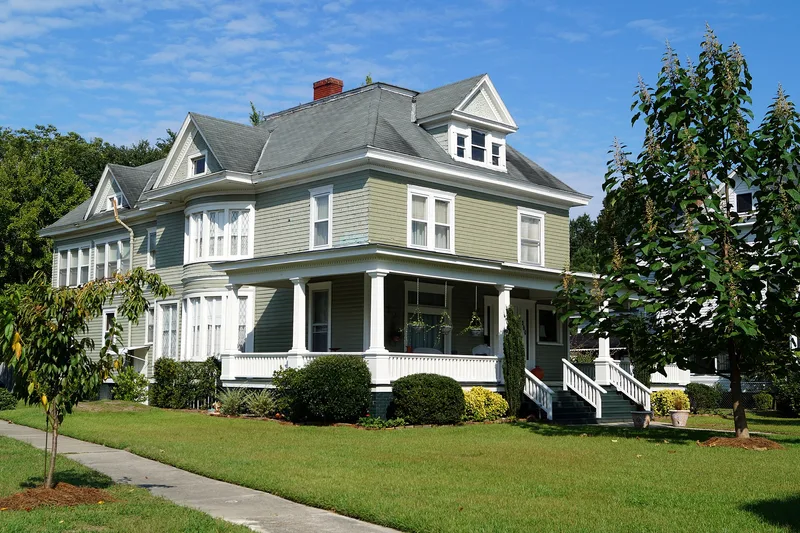
Mitchelltown is a residential neighborhood just northwest of downtown Kinston, North Carolina. It covers roughly 50 acres of flat ground on a grid of streets that follows the line of the railroad along its southern edge. Development began around 1885, when livery stable owner and farmer Adolphus Mitchell started building on his acreage, and was nearly complete by 1930. The district holds 235 resources, including 157 principal buildings and 78 secondary buildings, mostly garages. Most are wood-frame houses in the styles of the day: Queen Anne, Classical and Neo-Classical Revival, Colonial Revival, Craftsman, Spanish Mission Revival, American Four-Square and many bungalows. Several mail-order Aladdin houses appear, along with at least ten identical speculative two-story houses. Only about thirteen percent of resources are noncontributing, and little has changed since the period of significance, so the neighborhood keeps a high degree of integrity. It shows how Kinston's middle class lived near the center of a booming tobacco town.
Machine-generated summary. This summary was generated by a language model from the official nomination document and has not been reviewed line by line by an editor. It may contain errors. Check the source document before relying on any detail. Source: nomination document (PDF) · catalog entry. Generated October 2026 (model claude-sonnet-5-5, prompt v1.0-2026-10-29).
| Styles | Classical Revival, Colonial Revival, Bungalow/Craftsman |
|---|---|
| Areas of significance | Community Planning and Development, Architecture |
| Acreage | 50 |
| Boundary source | NPS cultural-resource GIS polygon |
| Full listing page | Mitchelltown Historic District (property record) |
What listing means for this property
This is a historic district. Buildings within its boundary are either contributing (they add to the district's significance) or non-contributing. Owners of contributing income-producing buildings can claim the 20% federal rehabilitation tax credit; homeowners should look at state credits. National Register districts impose no design review by themselves; a local historic district ordinance, if one exists, does (the difference explained).
General information, not legal or tax advice. Rules change; confirm with your State Historic Preservation Office or a qualified adviser.