Mitchell College Historic District (Additional Documentation II)

Why it's listed
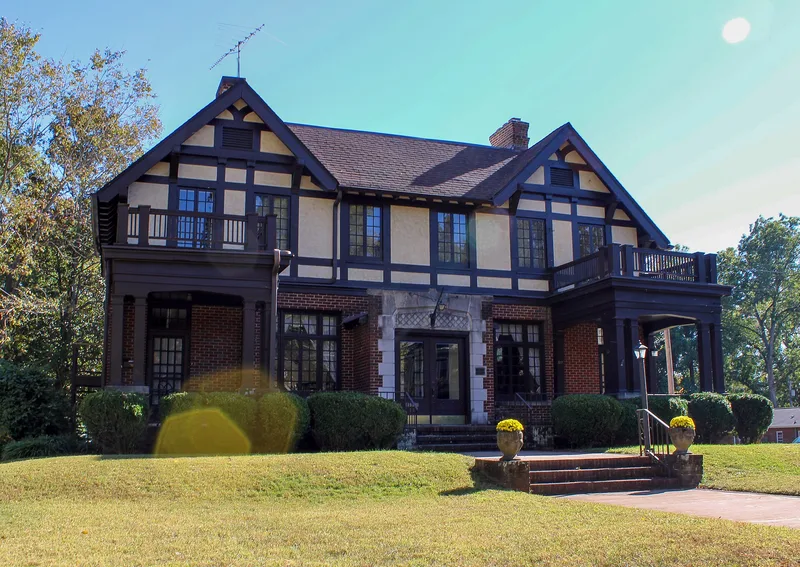
Just west of Statesville's commercial center, this district of more than 200 buildings rises on a gentle hill and centers on Mitchell College. West Broad Street ends in a cul-de-sac before the college's monumental main building, a stuccoed brick Greek Revival structure built between 1854 and 1856 with a hexastyle Doric portico. Tree-shaded streets around it hold houses built for middle and upper class families, mostly between about 1885 and 1918. Queen Anne houses dominate, including the ca. 1890 Lowenstein House, described as the finest example of the style in Iredell County. Colonial Revival, Neo-Classical, Regency and Tudor-influenced designs add variety. The district also includes the Fourth Creek Burying Ground, with gravestones from the mid-eighteenth century, a Gothic Revival meeting house of about 1875 and an 1891 synagogue. About 73 percent of the properties contribute to its character, and most are in good or excellent condition.
Machine-generated summary. This summary was generated by a language model from the official nomination document and has not been reviewed line by line by an editor. It may contain errors. Check the source document before relying on any detail. Source: nomination document (PDF) · catalog entry. Generated October 2026 (model claude-sonnet-5-5, prompt v1.0-2026-10-29).
| Styles | Greek Revival, Gothic Revival, Queen Anne, Colonial Revival, Neo-Classical Revival, Regency Revival, Elizabethan and Tudor Revival |
|---|---|
| Areas of significance | Education, Politics/Government, Architecture, Religion, Social History |
| Acreage | 114 |
| Boundary source | NPS cultural-resource GIS polygon |
| Full listing page | Mitchell College Historic District (Additional Documentation II) (property record) |
What listing means for this property
This is a historic district. Buildings within its boundary are either contributing (they add to the district's significance) or non-contributing. Owners of contributing income-producing buildings can claim the 20% federal rehabilitation tax credit; homeowners should look at state credits. National Register districts impose no design review by themselves; a local historic district ordinance, if one exists, does (the difference explained).
General information, not legal or tax advice. Rules change; confirm with your State Historic Preservation Office or a qualified adviser.