Main Street Historic District

Why it's listed
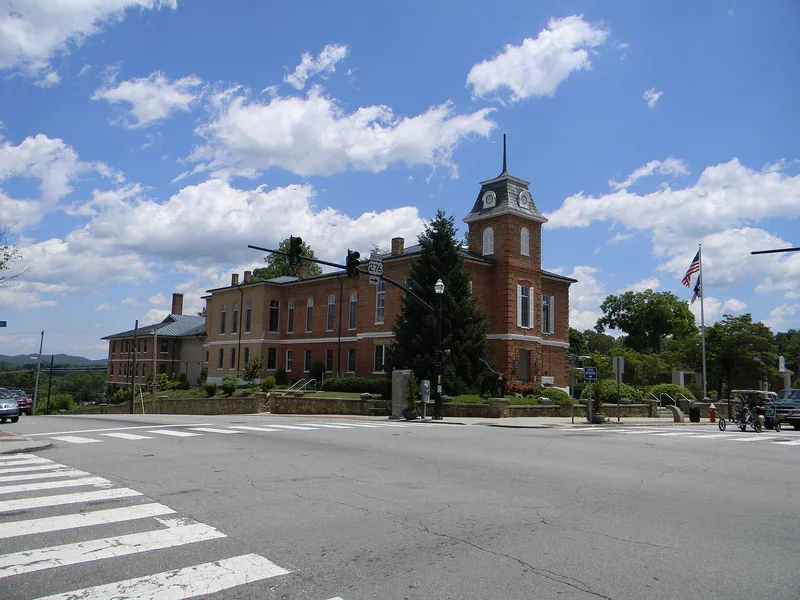
Brevard's central business district grew around the courthouse square, and this thirteen-acre district preserves that core. Its thirty-two contributing buildings date from 1874 to the early 1950s and are mostly one- to three-story brick or stucco commercial buildings with flat roofs and parapet walls. Landmarks include the 1874 Transylvania County Courthouse, a Second Empire brick building with a mansard-roofed tower, and the 1899 McMinn Building, the first brick commercial building completed downtown. Others include the Lowe Auto Company, with herringbone brickwork and cast car medallions, and the 1924 Neoclassical Revival Brevard Banking Company. Over the decades the buildings housed department stores, drugstores, hardware stores, auto dealerships, a theater, a post office, a fire station and law offices. The district was recognized for its importance to local commerce and for its architecture across the period from 1874 to 1952. Two buildings were already individually listed, and some storefronts have been altered.
Machine-generated summary. This summary was generated by a language model from the official nomination document and has not been reviewed line by line by an editor. It may contain errors. Check the source document before relying on any detail. Source: nomination document (PDF) · catalog entry. Generated October 2026 (model claude-sonnet-5-5, prompt v1.0-2026-10-29).
| Period of significance | 1874-1952 |
|---|---|
| Styles | Commercial Style, Second Empire, Classical Revival |
| Areas of significance | Architecture, Commerce |
| Acreage | 13 |
| Boundary source | NPS cultural-resource GIS polygon |
| Full listing page | Main Street Historic District (property record) |
What listing means for this property
This is a historic district. Buildings within its boundary are either contributing (they add to the district's significance) or non-contributing. Owners of contributing income-producing buildings can claim the 20% federal rehabilitation tax credit; homeowners should look at state credits. National Register districts impose no design review by themselves; a local historic district ordinance, if one exists, does (the difference explained).
General information, not legal or tax advice. Rules change; confirm with your State Historic Preservation Office or a qualified adviser.