Louisburg Historic District

Why it's listed
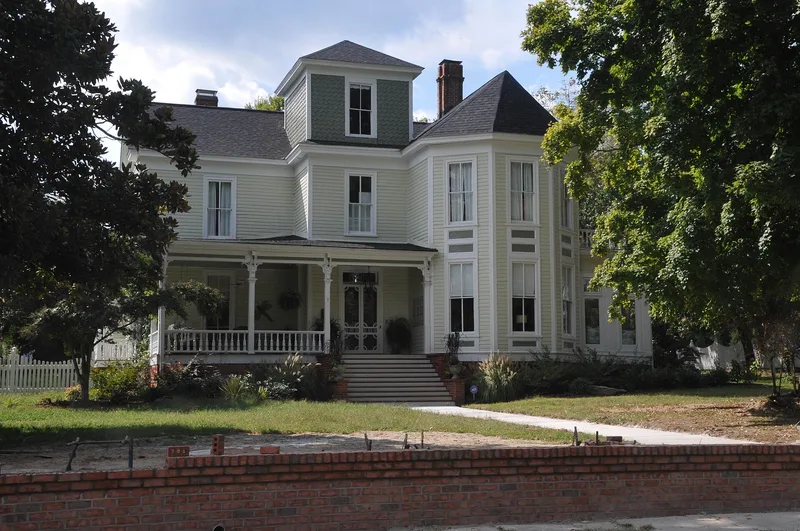
Louisburg Historic District covers 168 acres in the northern part of the Franklin County town, mostly within the street plan laid out in 1779. About 212 properties are included, among them houses, three brick churches, a frame Gothic Revival church and the old campus of Louisburg College. The architecture runs from a few late 18th-century Georgian houses through Greek Revival, Italianate, Victorian, Queen Anne, Neo Classical, Colonial Revival and Bungalow designs of the 1920s. Most buildings were the work of practical builders using pattern books, though regional builder Albert Gamaliel Jones and architects such as M. Stuart Davis and Howard Satterfield are named. Tobacco and cotton marketing brought prosperity between 1890 and 1915, and large estates were divided into house lots. Original street widths, block sizes, mature oak canopy, large lots and deep setbacks hold the district together. The downtown commercial area and the neighborhoods south of the Tar River were left out because of alterations and demolitions.
Machine-generated summary. This summary was generated by a language model from the official nomination document and has not been reviewed line by line by an editor. It may contain errors. Check the source document before relying on any detail. Source: nomination document (PDF) · catalog entry. Generated October 2026 (model claude-sonnet-5-5, prompt v1.0-2026-10-29).
| Period of significance | pre-1936 |
|---|---|
| Styles | Georgian/Federal, Greek Revival, Italianate, Victorian, Queen Anne, Neo Classical, Colonial Revival, Bungalow |
| Areas of significance | Education, Architecture |
| Acreage | 168 |
| Boundary source | NPS cultural-resource GIS polygon |
| Full listing page | Louisburg Historic District (property record) |
What listing means for this property
This is a historic district. Buildings within its boundary are either contributing (they add to the district's significance) or non-contributing. Owners of contributing income-producing buildings can claim the 20% federal rehabilitation tax credit; homeowners should look at state credits. National Register districts impose no design review by themselves; a local historic district ordinance, if one exists, does (the difference explained).
General information, not legal or tax advice. Rules change; confirm with your State Historic Preservation Office or a qualified adviser.