Laurinburg Commercial Historic District

Why it's listed
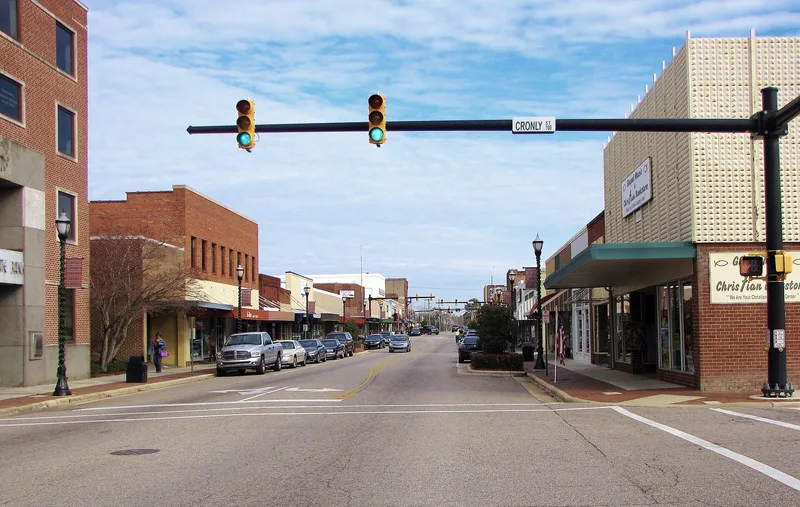
Laurinburg's downtown commercial district lies along Main Street in the county seat of Scotland County, North Carolina, and is built largely of one- and two-story brick storefronts. The earliest extant building is the c. 1893 Central Hotel, and the period of significance runs from about 1893 to 1953. The town grew around the Wilmington, Charlotte, and Rutherford Railroad, whose shops were moved here during the Civil War and remained until 1894. Textile mills founded from 1899 onward and the banking and mercantile activity of the McNair family sustained the business district. Buildings include the c. 1904 McDougald's Furniture Store and Funeral Parlor, the c. 1904 Everington's Drug Store, and the 1940 Gibson Theater, the town's only Art Deco commercial building. The 1918 First United Methodist Church, a Gothic Revival building, anchors the southern edge. The district is regarded as a well-preserved record of a turn-of-the-century railroad and county seat town.
Machine-generated summary. This summary was generated by a language model from the official nomination document and has not been reviewed line by line by an editor. It may contain errors. Check the source document before relying on any detail. Source: nomination document (PDF) · catalog entry. Generated October 2026 (model claude-haiku-5-5, prompt v1.1-2026-10-29).
| Period of significance | C. 1893-1953 |
|---|---|
| Styles | Colonial Revival, Moderne, Late Gothic Revival, Art Deco, Commercial Style |
| Areas of significance | Architecture, Commerce |
| Acreage | 20 |
| Boundary source | NPS cultural-resource GIS polygon |
| Full listing page | Laurinburg Commercial Historic District (property record) |
What listing means for this property
This is a historic district. Buildings within its boundary are either contributing (they add to the district's significance) or non-contributing. Owners of contributing income-producing buildings can claim the 20% federal rehabilitation tax credit; homeowners should look at state credits. National Register districts impose no design review by themselves; a local historic district ordinance, if one exists, does (the difference explained).
General information, not legal or tax advice. Rules change; confirm with your State Historic Preservation Office or a qualified adviser.