Lakewood Park Historic District

Why it's listed
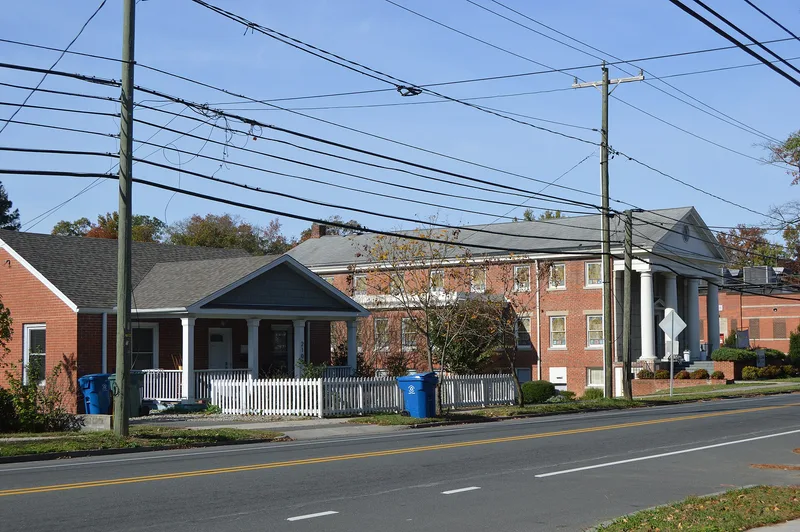
Lakewood Park is a neighborhood of about fourteen blocks in southwest Durham, North Carolina, developed beginning in 1902 around an amusement park built by the Durham Traction Company at the end of its trolley line. The park featured a swimming lake, a roller coaster, a dance pavilion, a skating rink, a bowling alley and a casino theater, and drew crowds from Durham and surrounding counties for more than twenty-five years. Lots were laid out from 1906 to 1908 on former farmsteads, and houses built between about 1902 and 1952 form the core of the district. The earliest are one-story frame cottages with Queen Anne details, followed by pyramidal cottages, Craftsman and bungalow houses of the 1920s, and Period Cottage and Minimal Traditional houses of the late 1930s and 1940s. Small brick commercial buildings along Chapel Hill Road, including grocery stores and a florist shop, served residents and park visitors. The district is significant for its planning and development as a streetcar suburb and for its range of early twentieth-century houses.
Machine-generated summary. This summary was generated by a language model from the official nomination document and has not been reviewed line by line by an editor. It may contain errors. Check the source document before relying on any detail. Source: nomination document (PDF) · catalog entry. Generated October 2026 (model claude-haiku-5-5, prompt v1.1-2026-10-29).
| Period of significance | ca. 1902-1952 |
|---|---|
| Styles | Bungalow/Craftsman; tri-gable, pyramidal cottage; Queen Anne; Classical Revival; Commercial Style |
| Areas of significance | Community Planning and Development, Architecture |
| Acreage | 28.7 |
| Boundary source | NPS cultural-resource GIS polygon |
| Full listing page | Lakewood Park Historic District (property record) |
What listing means for this property
This is a historic district. Buildings within its boundary are either contributing (they add to the district's significance) or non-contributing. Owners of contributing income-producing buildings can claim the 20% federal rehabilitation tax credit; homeowners should look at state credits. National Register districts impose no design review by themselves; a local historic district ordinance, if one exists, does (the difference explained).
General information, not legal or tax advice. Rules change; confirm with your State Historic Preservation Office or a qualified adviser.