Kenworth Historic District

The National Park Service has not published a boundary polygon for this district; the map shows the listed properties inside it and the district's reference point.
Why it's listed
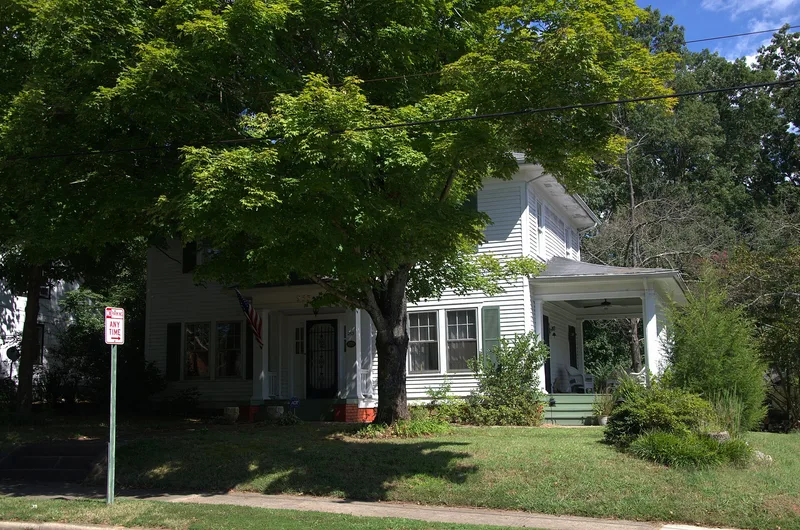
Kenworth Historic District is a compact neighborhood of twenty-three main buildings on roughly nine acres in southeast Hickory. It occupies the northwest corner of the original Kenworth subdivision, the city's first, and was built almost entirely between about 1920 and 1926. Fifth Street, entered between paired stone piers off Second Avenue, is its principal street. About seventy percent of the buildings are bungalows, and the group is described as the most varied and impressive collection of the type in Hickory. The houses share similar setbacks, lot sizes, gabled porches, exposed purlin brackets, tapered porch posts and stone or brick foundations suited to the sloping terrain. Other buildings include three Colonial Revival houses, the 1913 Kenworth Elementary School, and the 1926 Neo-Gothic former Christ Lutheran Church, now Mount Zion Baptist Church. The district was listed because its buildings form a cohesive, intact group that contrasts with the newer development around it.
Machine-generated summary. This summary was generated by a language model from the official nomination document and has not been reviewed line by line by an editor. It may contain errors. Check the source document before relying on any detail. Source: nomination document (PDF) · catalog entry. Generated October 2026 (model claude-sonnet-5-5, prompt v1.0-2026-10-29).
| Styles | Bungalow, with Colonial Revival houses and a Neo-Gothic Revival church |
|---|---|
| Areas of significance | Community Planning and Development, Architecture |
| Acreage | 9 |
| Boundary source | not published |
| Full listing page | Kenworth Historic District (property record) |
What listing means for this property
This is a historic district. Buildings within its boundary are either contributing (they add to the district's significance) or non-contributing. Owners of contributing income-producing buildings can claim the 20% federal rehabilitation tax credit; homeowners should look at state credits. National Register districts impose no design review by themselves; a local historic district ordinance, if one exists, does (the difference explained).
General information, not legal or tax advice. Rules change; confirm with your State Historic Preservation Office or a qualified adviser.