Intheoaks

Why it's listed
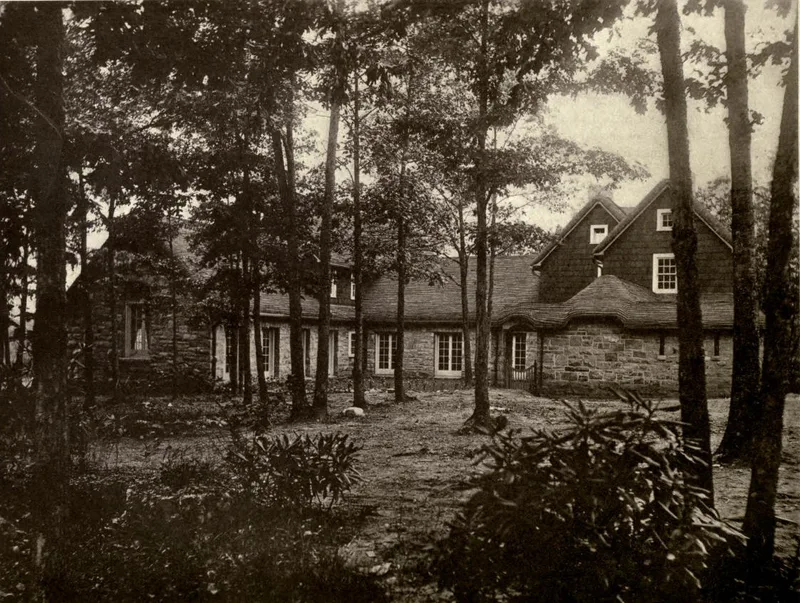
Built between 1919 and 1921 in Black Mountain, North Carolina, INTHEOAKS is a Tudor Revival country manor of granite ashlar and cedar shingle, with a shingled roof, a courtyard, and a two-story U-shaped plan. New York architect Frank E. Wallis designed the house for industrialist Franklin Silas Terry, and a recreation wing followed by 1923, designed first by Asheville architect Richard Sharp Smith and completed by Francis George Hasselman. Its interiors include a 63-foot living room with a kingpost truss ceiling, a music studio with a vaulted ceiling, and a Dutch-style tavern room. Prohibition-era features include a concealed wine cellar and a dumbwaiter hidden behind a wainscot panel. The estate is listed for its association with Terry, a leader in the incandescent lighting industry who was a key figure at National Electric Lamp Company, and for its architecture as a rare English-style country house in western North Carolina.
Machine-generated summary. This summary was generated by a language model from the official nomination document and has not been reviewed line by line by an editor. It may contain errors. Check the source document before relying on any detail. Source: nomination document (PDF) · catalog entry. Generated October 2026 (model claude-haiku-5-5, prompt v1.1-2026-10-29).
| Period of significance | 1921-1940 |
|---|---|
| Styles | Tudor Revival |
| Areas of significance | Industry, Architecture |
| Acreage | 71.8 |
| Boundary source | NPS cultural-resource GIS polygon |
| Full listing page | Intheoaks (property record) |
What listing means for this property
This is a historic district. Buildings within its boundary are either contributing (they add to the district's significance) or non-contributing. Owners of contributing income-producing buildings can claim the 20% federal rehabilitation tax credit; homeowners should look at state credits. National Register districts impose no design review by themselves; a local historic district ordinance, if one exists, does (the difference explained).
General information, not legal or tax advice. Rules change; confirm with your State Historic Preservation Office or a qualified adviser.