Hyman Heights-Mount Royal Historic District
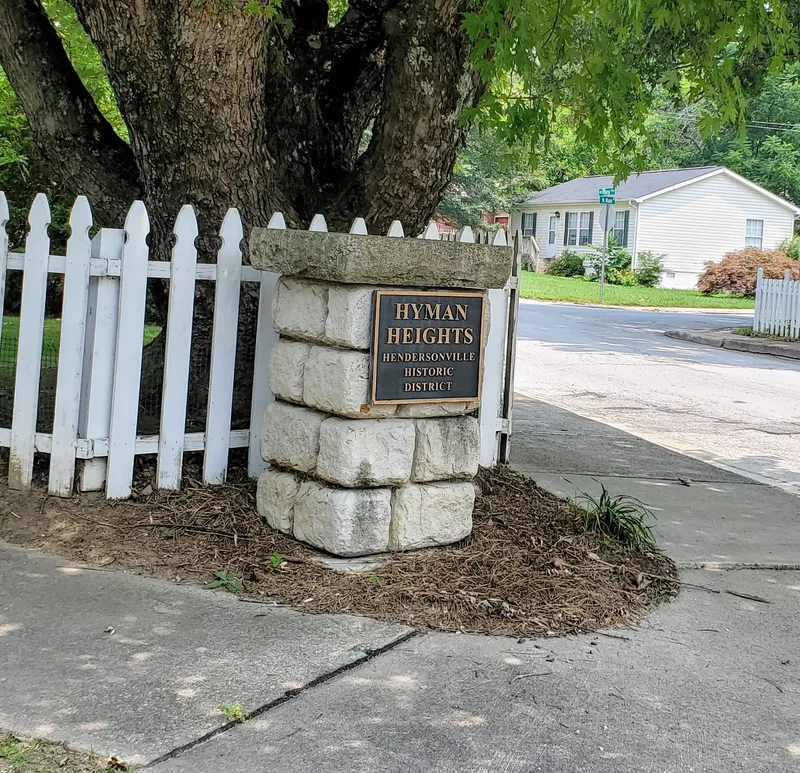

Why it's listed
Northeast of downtown Hendersonville, this forty-acre neighborhood combines two early twentieth-century subdivisions: Hyman Heights, platted in 1908 on a grid, and Mount Royal, platted in 1923 with curving streets that follow steep terrain and reflect an Olmsted-style approach to land planning. It holds 123 contributing houses and outbuildings and 26 non-contributing ones, and most were built before 1955 and remain largely intact. Bungalows are the most common type, followed by Minimal Traditional and Colonial Revival houses, with a few Ranch, Foursquare and other examples. Killarney, built about 1858, is the oldest house and the district's only Gothic Revival building. Much of the land was once part of its property. Stone retaining walls, mature trees and sidewalks mark the streetscapes. Building took place mainly from about 1905 to the late 1920s, with a second wave from the late 1940s to the mid-1950s. The district was listed for this cohesive collection of residential architecture and planning.
Machine-generated summary. This summary was generated by a language model from the official nomination document and has not been reviewed line by line by an editor. It may contain errors. Check the source document before relying on any detail. Source: nomination document (PDF) · catalog entry. Generated October 2026 (model claude-sonnet-5-5, prompt v1.0-2026-10-29).
| Period of significance | ca. 1858-1954 |
|---|---|
| Styles | Bungalow, Colonial Revival, Minimal Traditional |
| Areas of significance | Architecture, Community Planning and Development |
| Acreage | 40 |
| Boundary source | NPS cultural-resource GIS polygon |
| Full listing page | Hyman Heights-Mount Royal Historic District (property record) |
What listing means for this property
This is a historic district. Buildings within its boundary are either contributing (they add to the district's significance) or non-contributing. Owners of contributing income-producing buildings can claim the 20% federal rehabilitation tax credit; homeowners should look at state credits. National Register districts impose no design review by themselves; a local historic district ordinance, if one exists, does (the difference explained).
General information, not legal or tax advice. Rules change; confirm with your State Historic Preservation Office or a qualified adviser.