Highland Park Manufacturing Company Mill No. 3

The National Park Service has not published a boundary polygon for this district; the map shows the listed properties inside it and the district's reference point.
Why it's listed
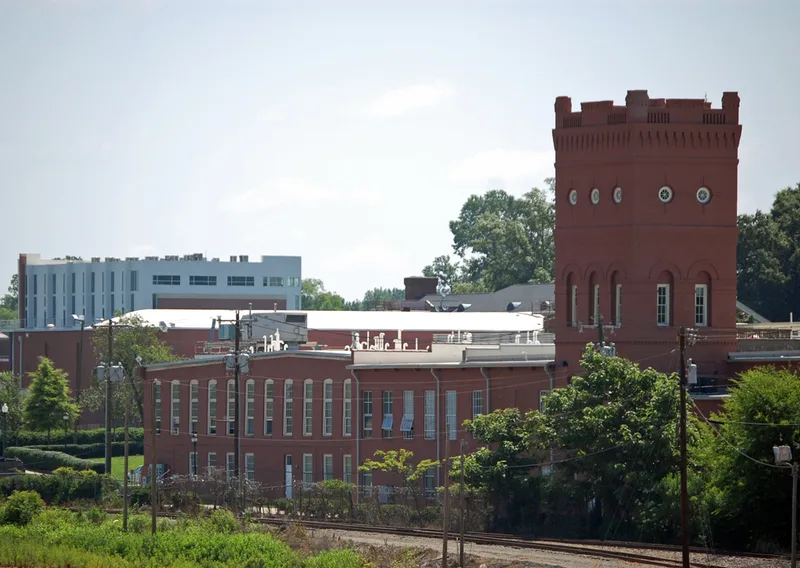
Highland Park Mill No. 3 is a cotton mill complex on North Davidson Street in Charlotte, built in 1903-4 on a site next to the railroad and beside a planned mill village. Designed by engineer Stuart Warren Cramer, the L-shaped brick mill has a low gable roof and several towers, the largest of which is four stories with corbelled brickwork and a crenelated parapet. Outbuildings include a gate house, dye house, boiler house, waste house and a later water tower. When finished, it held 30,000 spindles and 1,000 looms, employed over 800 people, and was the largest mill in the county. It was among the first North Carolina mills driven by electric power. Cramer used its plans as a model and published them in his book on mill construction. Among Charlotte's fifteen early mills, it is one of the two most nearly intact, which supports its listing for industry and architecture. Textile production ended in 1969.
Machine-generated summary. This summary was generated by a language model from the official nomination document and has not been reviewed line by line by an editor. It may contain errors. Check the source document before relying on any detail. Source: nomination document (PDF) · catalog entry. Generated October 2026 (model claude-sonnet-5-5, prompt v1.0-2026-10-29).
| Period of significance | 1903-1938 |
|---|---|
| Styles | Textile Mill Vernacular |
| Areas of significance | Industry, Architecture |
| Acreage | 9.3 |
| Boundary source | not published |
| Full listing page | Highland Park Manufacturing Company Mill No. 3 (property record) |
What listing means for this property
This is a historic district. Buildings within its boundary are either contributing (they add to the district's significance) or non-contributing. Owners of contributing income-producing buildings can claim the 20% federal rehabilitation tax credit; homeowners should look at state credits. National Register districts impose no design review by themselves; a local historic district ordinance, if one exists, does (the difference explained).
General information, not legal or tax advice. Rules change; confirm with your State Historic Preservation Office or a qualified adviser.