Henderson, Isabelle Bowen, House and Gardens

The National Park Service has not published a boundary polygon for this district; the map shows the listed properties inside it and the district's reference point.
Why it's listed
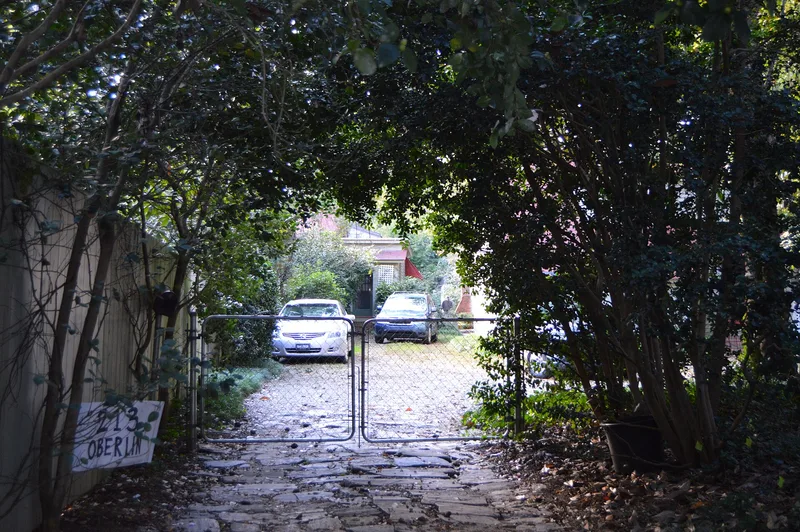
At 213 Oberlin Road in Raleigh, a modest turreted Victorian cottage sits within a composed landscape of gardens and small buildings. The house has an older two-room core from the Duncan Cameron Plantation and was moved back from the road and turned to face south in 1937. Isabelle Bowen Henderson, an artist trained at the Pennsylvania Academy and Columbia University, then added a Colonial Revival studio wing and a kitchen and dining porch. She built a carriage house, an herb house and a brick terrace, and laid out front, herb and working gardens on the 1.2-acre lot. The front room holds a hand-painted mural of the colonial Carolinas. Henderson drew on color theory, Arts and Crafts ideas and the garden writing of Gertrude Jekyll, and she kept garden records that a noted North Carolina garden writer cited. The listing recognizes the site as a cohesive work joining building and landscape.
Machine-generated summary. This summary was generated by a language model from the official nomination document and has not been reviewed line by line by an editor. It may contain errors. Check the source document before relying on any detail. Source: nomination document (PDF) · catalog entry. Generated October 2026 (model claude-sonnet-5-5, prompt v1.0-2026-10-29).
| Styles | Colonial Revival; Late Victorian |
|---|---|
| Areas of significance | Landscape Architecture, Architecture |
| Acreage | 1.2 |
| Boundary source | not published |
| Full listing page | Henderson, Isabelle Bowen, House and Gardens (property record) |
What listing means for this property
This is a historic district. Buildings within its boundary are either contributing (they add to the district's significance) or non-contributing. Owners of contributing income-producing buildings can claim the 20% federal rehabilitation tax credit; homeowners should look at state credits. National Register districts impose no design review by themselves; a local historic district ordinance, if one exists, does (the difference explained).
General information, not legal or tax advice. Rules change; confirm with your State Historic Preservation Office or a qualified adviser.