Hawkins Avenue Historic District

Why it's listed
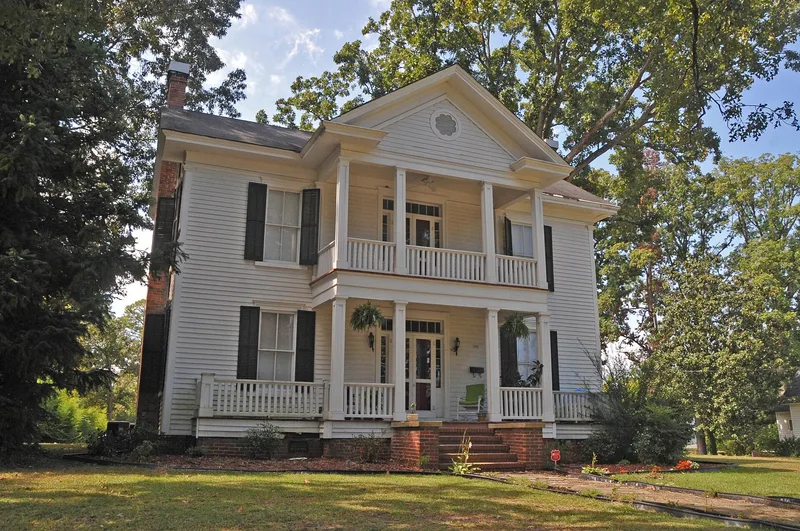
Hawkins Avenue Historic District covers roughly 84 acres just north of Sanford's central business district. Its fan-like shape follows the converging Southern Railway and Seaboard Air Line tracks. Of 183 principal buildings, 157 contribute to its character. The district mixes grand houses built for local businessmen, lawyers and industrialists with smaller homes for workers at nearby textile and furniture mills. The earliest house is an 1880s I-house, followed by Queen Anne cottages, a Neoclassical Revival house built in 1922, and many Craftsman bungalows. Three churches in Gothic Revival and Colonial Revival styles date from 1914 to 1928, and the former Sanford High School of 1925 is already individually listed. At the eastern edge stands the former Sanford Cotton Mill, a circa 1900 brick complex with a warehouse and office. Listing recognizes the district for community development and architecture between about 1885 and 1950, when Sanford grew around its railroads and mills.
Machine-generated summary. This summary was generated by a language model from the official nomination document and has not been reviewed line by line by an editor. It may contain errors. Check the source document before relying on any detail. Source: nomination document (PDF) · catalog entry. Generated October 2026 (model claude-sonnet-5-5, prompt v1.0-2026-10-29).
| Period of significance | circa 1885-1950 |
|---|---|
| Styles | Queen Anne, Colonial Revival, Craftsman, Neoclassical Revival, Prairie, Other: I-house |
| Areas of significance | Community Planning and Development, Architecture |
| Acreage | 84 |
| Boundary source | NPS cultural-resource GIS polygon |
| Full listing page | Hawkins Avenue Historic District (property record) |
What listing means for this property
This is a historic district. Buildings within its boundary are either contributing (they add to the district's significance) or non-contributing. Owners of contributing income-producing buildings can claim the 20% federal rehabilitation tax credit; homeowners should look at state credits. National Register districts impose no design review by themselves; a local historic district ordinance, if one exists, does (the difference explained).
General information, not legal or tax advice. Rules change; confirm with your State Historic Preservation Office or a qualified adviser.