Greenville Commercial Historic District

Why it's listed
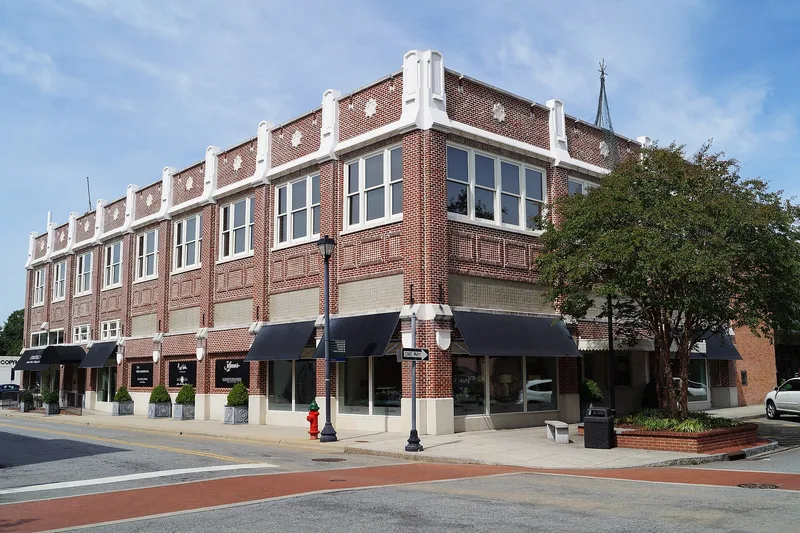
Greenville's downtown commercial core, centered on South Evans and Fifth Streets, holds 72 resources, most of them brick commercial buildings with retail space on the first floor and offices above. Built largely between 1900 and 1925, the buildings followed fires that destroyed much of the frame downtown in 1878, 1896, 1899 and 1910. After the 1899 fire the Board of Alderman required new construction along Evans Street to be brick. The district also includes the 1911 Pitt County Courthouse, designed by Milburn and Heister, and the 1913 Post Office by Oscar Wenderoth. The Montgomery Ward store, a three-story Art Deco building of 1929, and the 1911 Proctor Hotel, with seventy-seven rooms, add to its commercial character. Two dwellings, the c. 1860 Charles Greene House and the 1895 Robert Lee Humber House, survive from before the commercial growth. The district is regarded as a representative and intact record of Greenville's rise as a regional trading center.
Machine-generated summary. This summary was generated by a language model from the official nomination document and has not been reviewed line by line by an editor. It may contain errors. Check the source document before relying on any detail. Source: nomination document (PDF) · catalog entry. Generated October 2026 (model claude-haiku-5-5, prompt v1.1-2026-10-29).
| Period of significance | 1900-1952 |
|---|---|
| Styles | Greek Revival, Queen Anne, Classical Revival, Commercial Style, Art Deco, Art Moderne, Florentine Renaissance Revival |
| Areas of significance | Architecture, Commerce, Entertainment/Recreation |
| Acreage | 25 |
| Boundary source | NPS cultural-resource GIS polygon |
| Full listing page | Greenville Commercial Historic District (property record) |
What listing means for this property
This is a historic district. Buildings within its boundary are either contributing (they add to the district's significance) or non-contributing. Owners of contributing income-producing buildings can claim the 20% federal rehabilitation tax credit; homeowners should look at state credits. National Register districts impose no design review by themselves; a local historic district ordinance, if one exists, does (the difference explained).
General information, not legal or tax advice. Rules change; confirm with your State Historic Preservation Office or a qualified adviser.