Golden Belt Historic District

Why it's listed
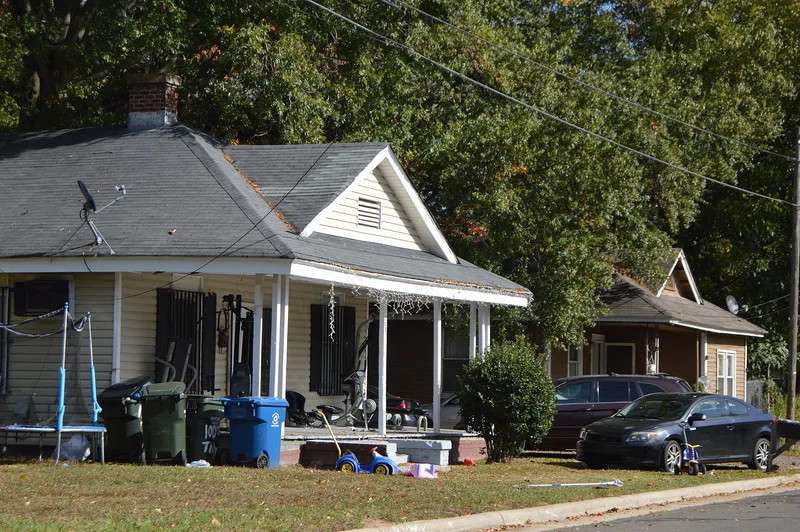
Golden Belt Historic District is a company mill village and factory complex in East Durham, covering 39.65 acres, with its industrial core built along the railroad tracks. The Golden Belt Manufacturing Company, founded in 1887 by Julian S. Carr, made cloth bags for the packaging of Bull Durham tobacco and later diversified into hosiery, cartons, labels and plastics. Its factory, begun in 1901, has Romanesque Revival towers, round-arched windows and slow-burn construction. Mill houses form an 11-1/2 block grid, with 63 houses from 1900-1902 and a later group of bungalows from the late 1910s. A small brick commercial block on East Main Street includes a 1920s Neoclassical Revival church. The district is significant for its link between tobacco and textile production, its surviving mill architecture and its workforce history. The company remained under American Tobacco Company ownership by 1958.
Machine-generated summary. This summary was generated by a language model from the official nomination document and has not been reviewed line by line by an editor. It may contain errors. Check the source document before relying on any detail. Source: nomination document (PDF) · catalog entry. Generated October 2026 (model claude-haiku-5-5, prompt v1.1-2026-10-29).
| Period of significance | 1901-1958 |
|---|---|
| Styles | Romanesque Revival |
| Areas of significance | Religion, Architecture |
| Acreage | 38.7 |
| Boundary source | NPS cultural-resource GIS polygon |
| Full listing page | Golden Belt Historic District (property record) |
What listing means for this property
This is a historic district. Buildings within its boundary are either contributing (they add to the district's significance) or non-contributing. Owners of contributing income-producing buildings can claim the 20% federal rehabilitation tax credit; homeowners should look at state credits. National Register districts impose no design review by themselves; a local historic district ordinance, if one exists, does (the difference explained).
General information, not legal or tax advice. Rules change; confirm with your State Historic Preservation Office or a qualified adviser.