Gimghoul Neighborhood Historic District

Why it's listed
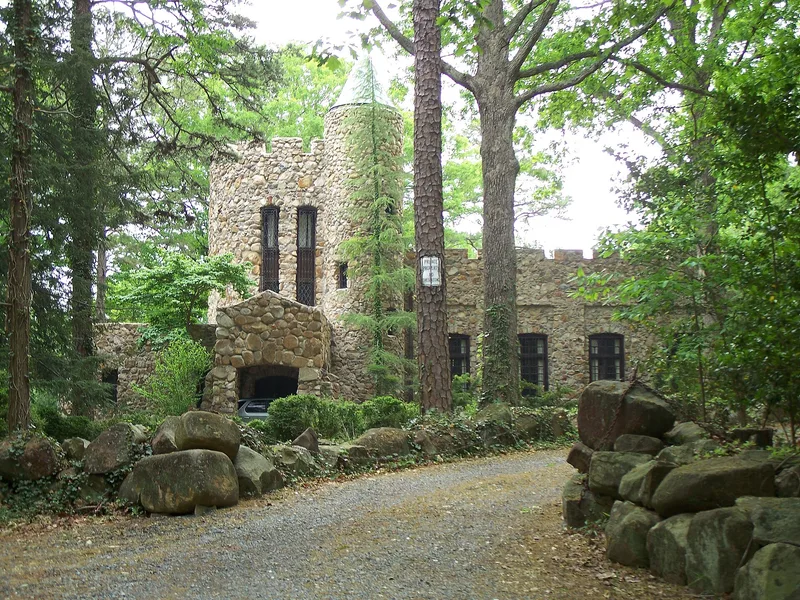
Gimghoul is a residential district of about thirty-seven houses and a church east of the University of North Carolina campus in Chapel Hill, built mostly between 1924 and the late 1930s. The Order of the Gimghouls, a university society, subdivided part of its land here to raise money for its Gimghoul Castle, completed in 1927. Early residents were largely university faculty and staff, along with some local businessmen. The neighborhood's houses are predominantly Colonial Revival, with some Craftsman and Tudor Revival examples among the 1920s houses. Many were built from popular plans by area contractors, and a few were designed by architects including William Sprinkle, George Hackney and Thomas C. Atwood. Stone retaining walls line the street frontages and curving Glandon Drive follows the slope above Battle Creek. The district is regarded as significant for its planning, for its early role as a residential development beyond the village, and for the streetscapes set within a wooded ridge landscape.
Machine-generated summary. This summary was generated by a language model from the official nomination document and has not been reviewed line by line by an editor. It may contain errors. Check the source document before relying on any detail. Source: nomination document (PDF) · catalog entry. Generated October 2026 (model claude-haiku-5-5, prompt v1.1-2026-10-29).
| Period of significance | 1924-1942 |
|---|---|
| Styles | Colonial Revival |
| Areas of significance | Community Planning and Development, Architecture |
| Acreage | 35 |
| Boundary source | NPS cultural-resource GIS polygon |
| Full listing page | Gimghoul Neighborhood Historic District (property record) |
What listing means for this property
This is a historic district. Buildings within its boundary are either contributing (they add to the district's significance) or non-contributing. Owners of contributing income-producing buildings can claim the 20% federal rehabilitation tax credit; homeowners should look at state credits. National Register districts impose no design review by themselves; a local historic district ordinance, if one exists, does (the difference explained).
General information, not legal or tax advice. Rules change; confirm with your State Historic Preservation Office or a qualified adviser.