Gilbert Town Historic District

Why it's listed
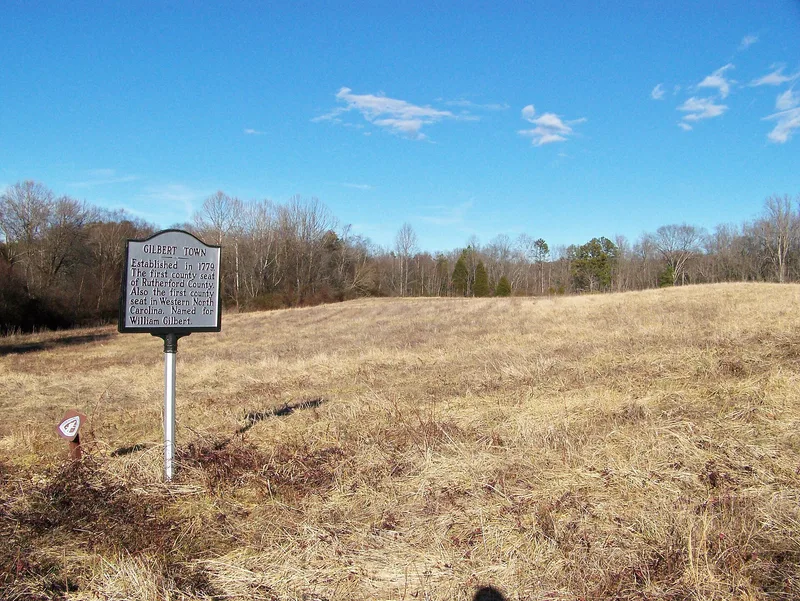
Gilbert Town is a historic district of about 459.5 acres northeast of Rutherfordton, North Carolina, now mostly farmland and woodland along Cathey's Creek. William Gilbert acquired land here from 1772 and ran a public house, store and blacksmith shop that made the settlement a stopping point on the frontier road to upland South Carolina. Gilbert held county and assembly offices and was buried in the Gilbert Cemetery in 1790. From 1781 to 1783 his house served as the Rutherford County courthouse. During the Revolutionary War the settlement was used by Patriot and Loyalist forces, and in September 1780 Major Patrick Ferguson camped there with about 1,000 troops before the Overmountain Men gathered against him. Gilbert Town was then used to hold prisoners and to care for wounded Patriot soldiers. A 2004 archaeological survey recovered musket balls, sword fragments and eighteenth-century nails and pottery from eight loci, although no eighteenth-century buildings remain standing.
Machine-generated summary. This summary was generated by a language model from the official nomination document and has not been reviewed line by line by an editor. It may contain errors. Check the source document before relying on any detail. Source: nomination document (PDF) · catalog entry. Generated October 2026 (model claude-haiku-5-5, prompt v1.1-2026-10-29).
| Period of significance | 1776-1782 |
|---|---|
| Areas of significance | Military, Politics/Government, Historic - Non-Aboriginal |
| Acreage | 459.5 |
| Boundary source | NPS cultural-resource GIS polygon |
| Full listing page | Gilbert Town Historic District (property record) |
What listing means for this property
This is a historic district. Buildings within its boundary are either contributing (they add to the district's significance) or non-contributing. Owners of contributing income-producing buildings can claim the 20% federal rehabilitation tax credit; homeowners should look at state credits. National Register districts impose no design review by themselves; a local historic district ordinance, if one exists, does (the difference explained).
General information, not legal or tax advice. Rules change; confirm with your State Historic Preservation Office or a qualified adviser.