Galloway, Flem, House

The National Park Service has not published a boundary polygon for this district; the map shows the listed properties inside it and the district's reference point.
Why it's listed
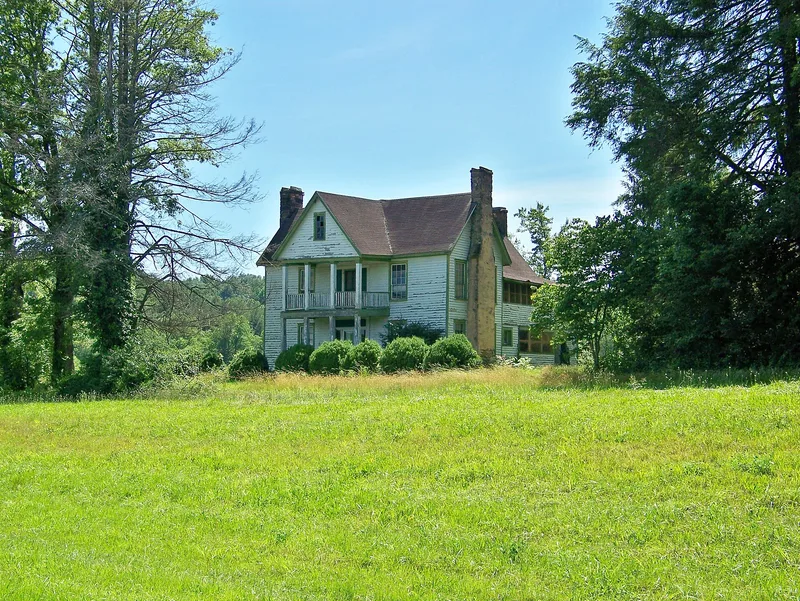
Built in 1878 on the west side of SR 1388 near Calvert, this farmstead in Transylvania County centers on a two-story, timber-frame, weatherboarded I-house with a striking two-tiered, cross-gabled front porch. Flem Galloway, a Confederate veteran, is said to have planned the design while serving in Virginia. Local builder Joshua Orr constructed it from native oak, locust and pine, with locally quarried stone for the chimneys and foundation piers. Imported blue glass in the transoms and sidelights is a notable decorative feature. Inside, the plank walls, wood-grained doors and Greek Revival-style mantels remain largely intact. A large weatherboarded smokehouse of the same date stands in the north yard, along with a stone terrace wall finished in 1883. Five later farm outbuildings from 1920 to 1945 complete the group. The property was listed for its architecture, as one of the county's most intact nineteenth-century, pre-railroad dwellings. The house has been vacant for about ten years, and descendants of the builder maintain it.
Machine-generated summary. This summary was generated by a language model from the official nomination document and has not been reviewed line by line by an editor. It may contain errors. Check the source document before relying on any detail. Source: nomination document (PDF) · catalog entry. Generated October 2026 (model claude-sonnet-5-5, prompt v1.0-2026-10-29).
| Period of significance | 1878 |
|---|---|
| Styles | Other: I-house |
| Areas of significance | Architecture |
| Acreage | 1.3 |
| Boundary source | not published |
| Full listing page | Galloway, Flem, House (property record) |
What listing means for this property
This is a historic district. Buildings within its boundary are either contributing (they add to the district's significance) or non-contributing. Owners of contributing income-producing buildings can claim the 20% federal rehabilitation tax credit; homeowners should look at state credits. National Register districts impose no design review by themselves; a local historic district ordinance, if one exists, does (the difference explained).
Noted as vacant in the nomination. Nomination documents can be decades old; current status may differ. If you are considering buying an empty listed property, read the due-diligence checklist.
General information, not legal or tax advice. Rules change; confirm with your State Historic Preservation Office or a qualified adviser.