Frog Level Historic District

The National Park Service has not published a boundary polygon for this district; the map shows the listed properties inside it and the district's reference point.
Why it's listed
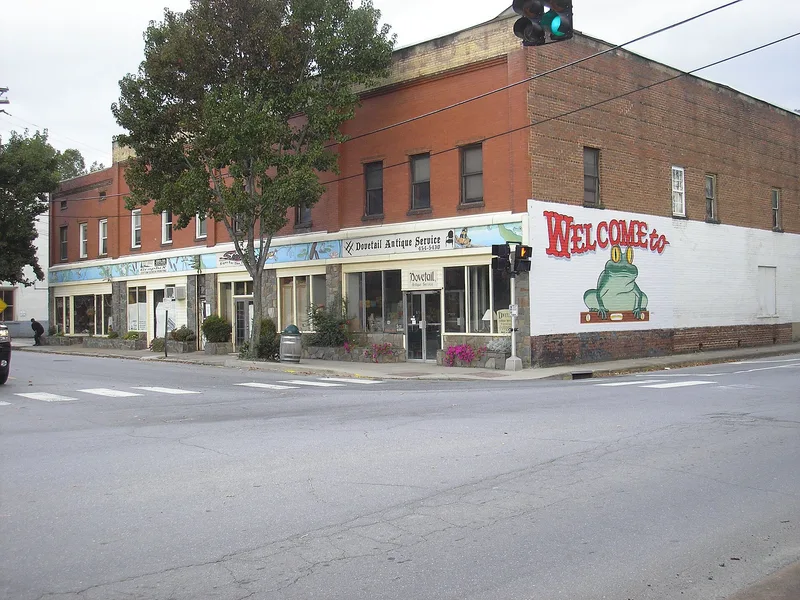
Frog Level is a low-lying commercial area in Waynesville, North Carolina, downhill from Main Street and centered on Richland Creek and the railroad tracks. Development began after the train arrived in 1884, and the area took its name from its tendency to flood. The district covers about five acres and holds sixteen contributing buildings and one contributing bridge, mostly one- and two-story brick or frame structures from the first half of the twentieth century. Businesses here were closely tied to the railroad, serving as warehouses and wholesale centers, and livery operators carried arriving visitors up the hill to inns and boarding houses. Notable buildings include a small Queen Anne cottage, an early frame garage, two Romanesque-influenced brick stores, and a 1936 National Guard armory built during the Works Progress Administration era. The district was recognized for its architecture and for its role in the town's commercial growth between about 1900 and 1949, when passenger rail service ended.
Machine-generated summary. This summary was generated by a language model from the official nomination document and has not been reviewed line by line by an editor. It may contain errors. Check the source document before relying on any detail. Source: nomination document (PDF) · catalog entry. Generated October 2026 (model claude-sonnet-5-5, prompt v1.0-2026-10-29).
| Period of significance | ca. 1900-1949 |
|---|---|
| Styles | Commercial Style; Romanesque |
| Areas of significance | Architecture, Commerce |
| Acreage | 4.9 |
| Boundary source | not published |
| Full listing page | Frog Level Historic District (property record) |
What listing means for this property
This is a historic district. Buildings within its boundary are either contributing (they add to the district's significance) or non-contributing. Owners of contributing income-producing buildings can claim the 20% federal rehabilitation tax credit; homeowners should look at state credits. National Register districts impose no design review by themselves; a local historic district ordinance, if one exists, does (the difference explained).
General information, not legal or tax advice. Rules change; confirm with your State Historic Preservation Office or a qualified adviser.