Edenton Cotton Mill Historic District

Why it's listed
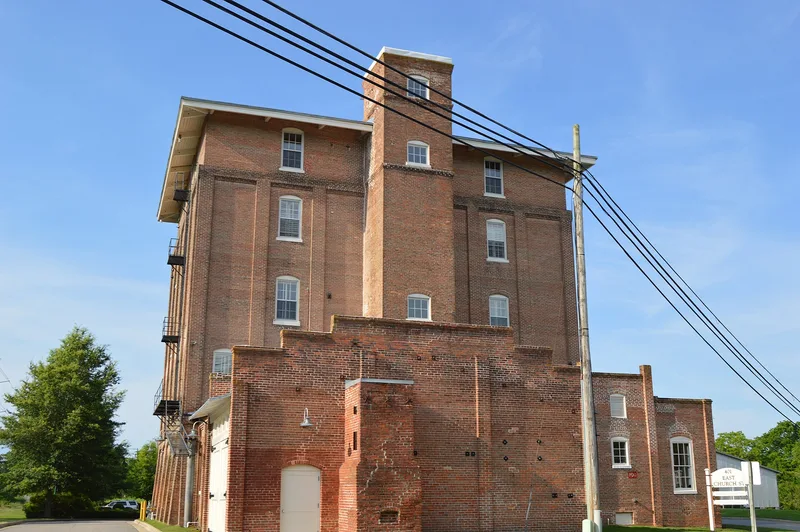
Built beginning in 1899 on the eastern edge of Edenton, the Edenton Cotton Mill Historic District is a compact mill village of seven blocks containing a large brick mill, a brick office, a brick-veneered church, and frame worker dwellings. The mill was designed by C. R. Makepeace of Providence, Rhode Island, whose firm planned more than 250 textile plants, and it features a three-stage tower, a monitor roof running about 550 feet, and segmentally arched window bays. The company was organized in 1898 by local investors seeking to keep textile profits at home. Most of the one-story frame houses were built in the 1899-1923 period, including duplexes with shared kitchens and single-family units, and many retain original porches and six-over-six sash windows. The entire complex remained under company ownership until 1995, which limited alterations and outbuilding construction. Its cohesion and integrity are regarded as unusual for mill districts in eastern North Carolina.
Machine-generated summary. This summary was generated by a language model from the official nomination document and has not been reviewed line by line by an editor. It may contain errors. Check the source document before relying on any detail. Source: nomination document (PDF) · catalog entry. Generated October 2026 (model claude-haiku-5-5, prompt v1.1-2026-10-29).
| Period of significance | 1899-1948 |
|---|---|
| Styles | Italianate; Colonial Revival; Bungalow/Craftsman |
| Areas of significance | Community Planning and Development, Social History, Industry, Architecture |
| Acreage | 48.9 |
| Boundary source | NPS cultural-resource GIS polygon |
| Full listing page | Edenton Cotton Mill Historic District (property record) |
What listing means for this property
This is a historic district. Buildings within its boundary are either contributing (they add to the district's significance) or non-contributing. Owners of contributing income-producing buildings can claim the 20% federal rehabilitation tax credit; homeowners should look at state credits. National Register districts impose no design review by themselves; a local historic district ordinance, if one exists, does (the difference explained).
General information, not legal or tax advice. Rules change; confirm with your State Historic Preservation Office or a qualified adviser.