Durham Cotton Mills Village Historic District

Why it's listed
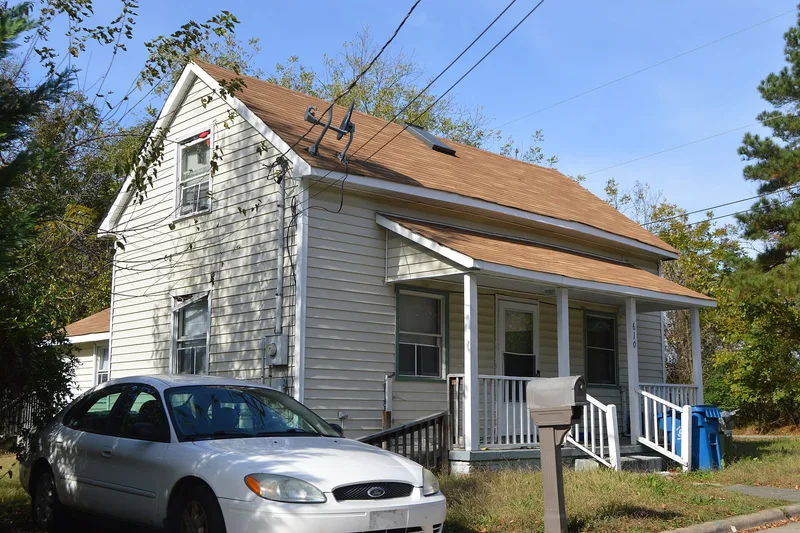
Twenty dwellings on Middle and Reservoir streets in Durham make up what remains of the city's first textile mill village. Fifteen are one-and-one-half-story mill houses built in 1884-1885 for workers of the Durham Cotton Manufacturing Company, founded by Julian S. Carr with members of the Odell family, experienced textile manufacturers. The mill gave Durham a manufacturing base beyond tobacco, supplying cloth for tobacco pouches and later ginghams. The houses are one room deep with a central chimney and a low "story and a jump" form, and their main facades are covered in board and molded batten siding. Inventories elsewhere in the North Carolina piedmont have found no matching examples. Porches have been enclosed and rear additions made, but the basic form and distinctive siding survive. The six-lane expressway isolates the district from the mill and the surrounding neighborhood. The houses are rented, in deteriorated condition, and five brick duplexes built since 1980 have intruded among them.
Machine-generated summary. This summary was generated by a language model from the official nomination document and has not been reviewed line by line by an editor. It may contain errors. Check the source document before relying on any detail. Source: nomination document (PDF) · catalog entry. Generated October 2026 (model claude-sonnet-5-5, prompt v1.0-2026-10-29).
| Period of significance | 1800-1899 (specific date: mid 1880s) |
|---|---|
| Styles | Story-and-a-jump mill houses with board and molded batten sheathing |
| Areas of significance | Industry, Architecture |
| Acreage | 5.9 |
| Boundary source | NPS cultural-resource GIS polygon |
| Full listing page | Durham Cotton Mills Village Historic District (property record) |
What listing means for this property
This is a historic district. Buildings within its boundary are either contributing (they add to the district's significance) or non-contributing. Owners of contributing income-producing buildings can claim the 20% federal rehabilitation tax credit; homeowners should look at state credits. National Register districts impose no design review by themselves; a local historic district ordinance, if one exists, does (the difference explained).
General information, not legal or tax advice. Rules change; confirm with your State Historic Preservation Office or a qualified adviser.