Dix Hill

Why it's listed
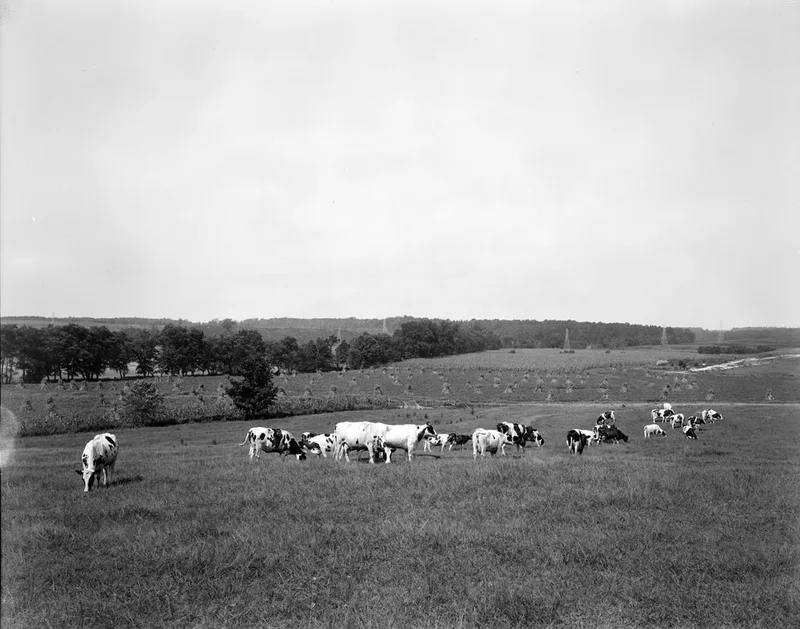
Dix Hill is the historic core of Dorothea Dix Hospital, the state hospital for the mentally ill in southwest Raleigh. The nominated district covers the pre-1941 resources on part of a roughly 400-acre campus: a wooded hillside known as the Grove, two stone entrance gates, a Victorian gazebo, and buildings dating from 1898 to 1939. Architect A. J. Davis designed the original Center Building, completed in 1856 and shaped by Kirkbride ideas on asylum planning. Its central pavilion was demolished in 1951 and replaced by a six-story section, so the complex counts as noncontributing, though Davis's wings keep their plan and brick vaulting. Other resources include Colonial Revival dormitories of the 1930s, Craftsman and Victorian staff houses, and stone residences from 1923. Together they illustrate the growth of humane mental health care in North Carolina and the evolution of the hospital's landscaped grounds, which resemble the oak grove of Pullen Park.
Machine-generated summary. This summary was generated by a language model from the official nomination document and has not been reviewed line by line by an editor. It may contain errors. Check the source document before relying on any detail. Source: nomination document (PDF) · catalog entry. Generated October 2026 (model claude-sonnet-5-5, prompt v1.0-2026-10-29).
| Period of significance | 1856-1940 |
|---|---|
| Styles | Colonial Revival, Bungalow/Craftsman, Eastlake (also Tuscan Revival, Dutch Colonial, Classical Revival and Stick Style elements) |
| Areas of significance | Landscape Architecture, Health/Medicine, Architecture |
| Acreage | 80 |
| Boundary source | NPS cultural-resource GIS polygon |
| Full listing page | Dix Hill (property record) |
What listing means for this property
This is a historic district. Buildings within its boundary are either contributing (they add to the district's significance) or non-contributing. Owners of contributing income-producing buildings can claim the 20% federal rehabilitation tax credit; homeowners should look at state credits. National Register districts impose no design review by themselves; a local historic district ordinance, if one exists, does (the difference explained).
General information, not legal or tax advice. Rules change; confirm with your State Historic Preservation Office or a qualified adviser.