Dilworth Historic District

Why it's listed
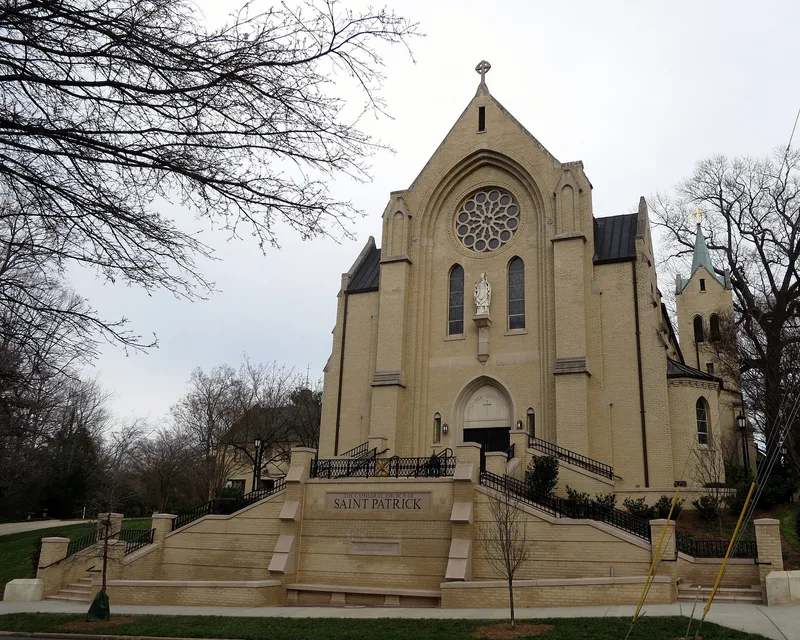
Dilworth is a streetcar suburb in Charlotte, North Carolina, spread over roughly 63 blocks and 395 acres. Developer Edward Latta began it in 1891 with a grid of streets ringed by a boulevard and park, through which the city's first streetcar line ran. In 1912 a southern section followed a plan by the Olmsted Brothers, and a northern curvilinear section was platted in 1920. The district holds more than a thousand inventoried buildings, mostly single and multi-family houses, along with churches, a school and commercial structures. About 82 percent of the principal buildings contribute to its character. Late Victorian and Queen Anne houses mark the earliest years, followed by Colonial Revival mansions and cottages, Four Square houses, and many Bungalows, some designed by Fred L. Bonfoey. Architect Charles C. Hook supplied plans for Colonial Revival homes. Latta Park, once a ninety-acre amusement park, lies within the district. Together the buildings and street plans show how a planned suburb grew between 1891 and 1941.
Machine-generated summary. This summary was generated by a language model from the official nomination document and has not been reviewed line by line by an editor. It may contain errors. Check the source document before relying on any detail. Source: nomination document (PDF) · catalog entry. Generated October 2026 (model claude-sonnet-5-5, prompt v1.0-2026-10-29).
| Period of significance | 1891-1941 |
|---|---|
| Styles | Colonial Revival, Picturesque or Period Revival, Bungalow, with Victorian, Queen Anne and Four Square examples |
| Areas of significance | Community Planning and Development, Landscape Architecture, Architecture |
| Acreage | 395 |
| Boundary source | NPS cultural-resource GIS polygon |
| Full listing page | Dilworth Historic District (property record) |
What listing means for this property
This is a historic district. Buildings within its boundary are either contributing (they add to the district's significance) or non-contributing. Owners of contributing income-producing buildings can claim the 20% federal rehabilitation tax credit; homeowners should look at state credits. National Register districts impose no design review by themselves; a local historic district ordinance, if one exists, does (the difference explained).
General information, not legal or tax advice. Rules change; confirm with your State Historic Preservation Office or a qualified adviser.