DeGraffenried Park Historic District

Why it's listed
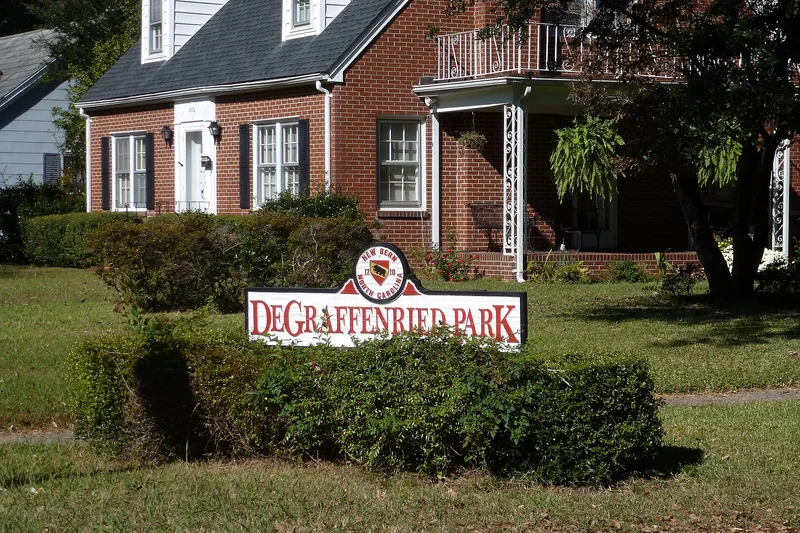
DeGraffenried Park is a six-block residential subdivision about a mile west of central New Bern, platted in 1926. Its grid of large lots holds fifty-seven houses, most built between 1926 and 1956, along with many matching detached garages, some with upper-level apartments that were rented to military families during and after World War II. Houses are set well back behind broad lawns and unusually wide grassed medians. Concrete sidewalks and four original concrete light poles with urn-shaped globes line Queen Anne Lane. Early development before the Depression produced mostly two-story brick Colonial Revival houses. Later construction added a Jacobethan Revival house designed by architect Raymond Fuson, a rare Craftsman house, Tudor cottages, bungalows, wartime Colonial Revival cottages and postwar Cape Cods and Ranch houses. Remnants of an old pecan orchard survive in the northern blocks. The district was listed because it keeps its original plan, landscape and architecture largely intact, giving a coherent picture of suburban growth in New Bern from the late 1920s through the mid-1950s.
Machine-generated summary. This summary was generated by a language model from the official nomination document and has not been reviewed line by line by an editor. It may contain errors. Check the source document before relying on any detail. Source: nomination document (PDF) · catalog entry. Generated October 2026 (model claude-sonnet-5-5, prompt v1.0-2026-10-29).
| Period of significance | 1926-1956 |
|---|---|
| Styles | Colonial Revival, Tudor Revival, Bungalow/Craftsman, Modern Movement |
| Areas of significance | Community Planning and Development, Architecture |
| Acreage | 21 |
| Boundary source | NPS cultural-resource GIS polygon |
| Full listing page | DeGraffenried Park Historic District (property record) |
What listing means for this property
This is a historic district. Buildings within its boundary are either contributing (they add to the district's significance) or non-contributing. Owners of contributing income-producing buildings can claim the 20% federal rehabilitation tax credit; homeowners should look at state credits. National Register districts impose no design review by themselves; a local historic district ordinance, if one exists, does (the difference explained).
General information, not legal or tax advice. Rules change; confirm with your State Historic Preservation Office or a qualified adviser.